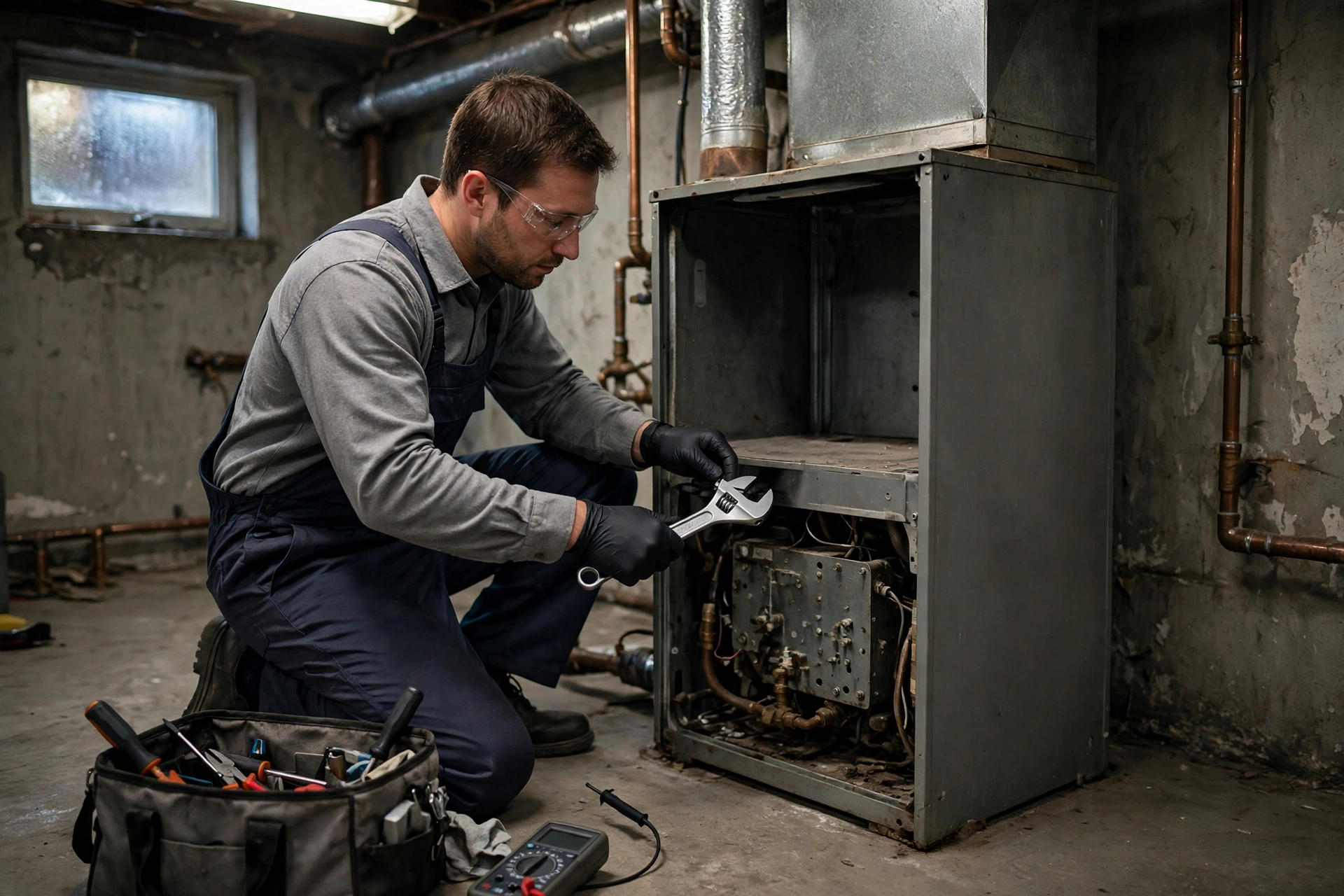
Furnace Repair
Furnace repair in New Hampshire covers diagnosis and repair of gas and oil furnaces that will not start, will …
Learn more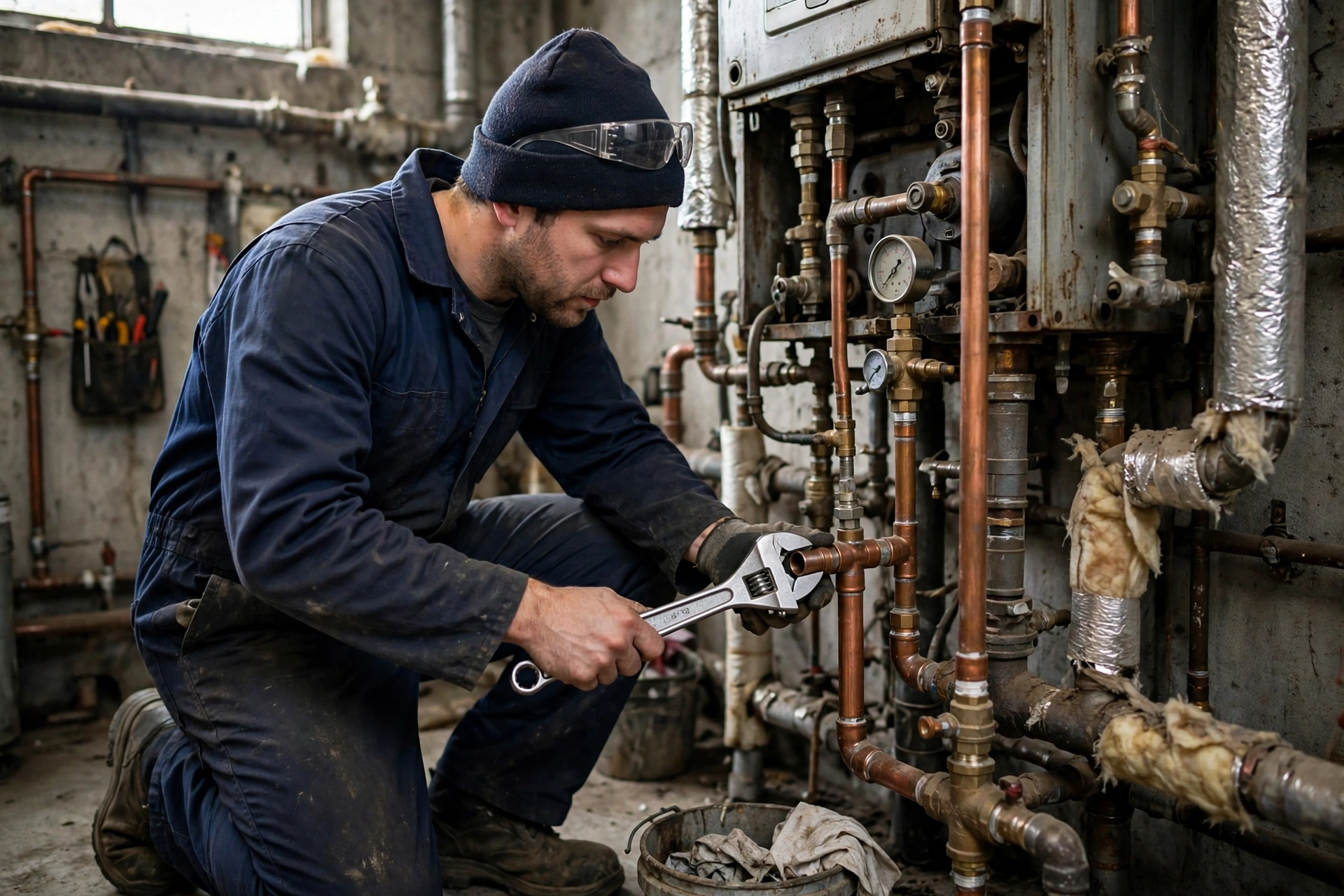
Boilers heat many older New Hampshire homes through radiators and baseboard units, delivering steady warmth that feels different from forced warm air. Water or steam moves through pipes set into walls, floors, and basements, often in houses where that piping has served for generations. When a boiler falters, the signs can be subtle at first, with one radiator staying cool, a baseboard hissing, or pressure rising and falling in ways the household only notices when rooms begin to feel uneven.
New Hampshire winters test boilers in specific ways. Long cold periods keep systems running for months, freeze and thaw cycles stress pipes in unheated spaces, and older piping can develop slow leaks at valves and joints that go unnoticed behind walls or under floors. Heating oil boilers add burner and fuel concerns, while gas boilers add ignition and venting concerns, and both types depend on correct pressure, clean water circulation, and controls that respond accurately to thermostat calls from different zones.
Granite State Furnace Pros approaches boiler repair by tracing the whole hydronic path, from burner to the farthest radiator. Pressure, circulation, air in the system, burner operation, and zone controls are checked together, because a cold radiator can come from trapped air, a failing circulator, a closed valve, or a control fault, and each cause needs a different repair. The goal is quiet, even heat restored across the home, with leaks and pressure problems addressed at their source rather than patched in passing.
Boiler trouble often announces itself quietly. A radiator that heats only at the bottom, a baseboard that gurgles or hisses, a pressure gauge that climbs too high or drops too low, or water stains near a valve can all signal a developing fault. Because boilers heat slowly and steadily, households sometimes adjust to gradual change, turning up a thermostat or closing off a cold room, without realizing that circulation or pressure has drifted away from normal operation.
Noises deserve particular attention in older systems. Kettling, banging, or gurgling can come from mineral buildup, trapped air, or water flow problems, and each sound points to a different part of the system. A boiler that cycles on and off rapidly, runs far longer than usual, or leaves the basement damp around piping joints should be inspected before winter demand increases, because hydronic faults tend to worsen under sustained load and can turn a slow leak into a larger water problem.
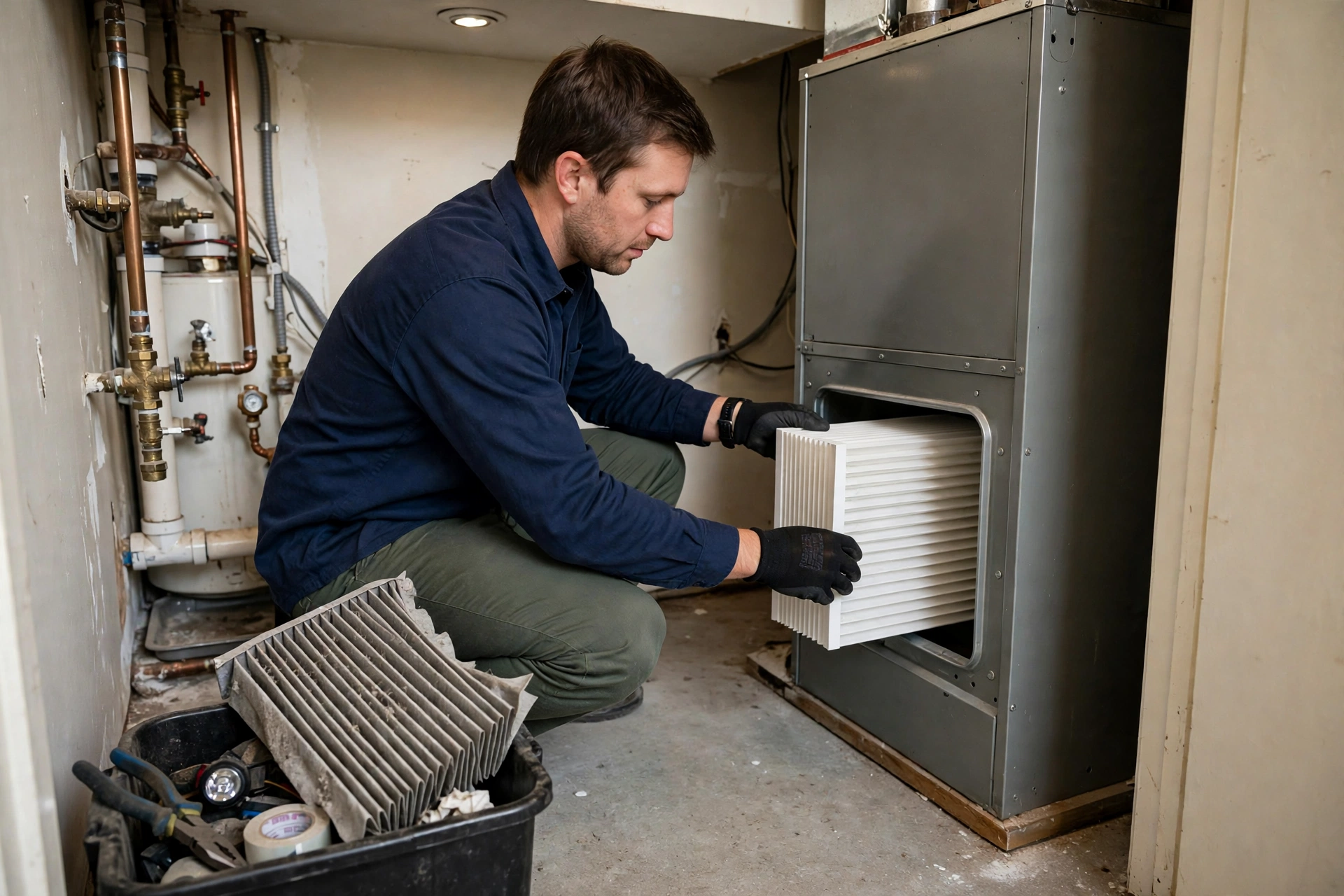
Uneven heat in a boiler home usually traces back to circulation or air, not to the boiler burner alone. Air trapped in a radiator blocks water flow and leaves the top of the unit cold, while a weak circulator pump struggles to push water to far rooms, especially upstairs zones or additions served by long pipe runs. Closed or partially closed valves, often bumped during cleaning or storage moves, can also starve a single radiator while the rest of the house heats normally.
Older New Hampshire homes complicate that picture, because radiator sizes were often chosen for rooms as they existed decades ago, and later renovations changed room use without changing radiator capacity. A former bedroom converted to a home office, a finished attic, or an enclosed porch may now need different heat than its original radiator provides. Repair work therefore checks bleeding, valves, circulator strength, and zone balance together, and explains when a cold room reflects a circulation fault and when it reflects a layout change that needs a different solution.
Pressure sits at the heart of boiler operation, and both high and low readings tell a story. Low pressure can come from a slow leak, a failing expansion tank, or air venting out of the system, and it often shows up as cold upper radiators first. High pressure can come from a faulty fill valve, a waterlogged expansion tank, or overheating, and it may force water out through a relief valve as a safety response. Checking pressure cold and hot, inspecting the expansion tank, and testing the relief valve helps separate a simple refill problem from a component fault.
Leaks in boiler systems deserve prompt attention even when they look small, because steady water loss introduces fresh oxygen and minerals that accelerate corrosion inside pipes and radiators. A damp joint in a basement may seem minor, but over a heating season it can stain floors, damage nearby wood, and weaken the system from within. Repair focuses on the leaking joint, valve, or section itself, followed by a pressure test and a check that water chemistry and circulation return to stable operation.
Oil boilers share many needs with oil furnaces, including burner cleaning, nozzle condition, fuel filter care, and flame quality checks. A burner that soots or locks out in deep winter often reflects fuel or ignition drift that built up during autumn, and New Hampshire cold makes that drift visible quickly because the boiler runs longer and more often. Fuel lines through cold basements, tank condition, and vent clearance from snow all belong in a winter boiler inspection, alongside the burner itself.
Gas boilers bring different winter concerns, including ignition reliability, vent draft, and condensate handling where the system produces it. Snow or ice at a vent termination can interrupt draft and trip safety controls, while a condensate line through an unheated space can freeze and shut the system down. A repair visit in winter therefore looks at vent routes, drains, and outdoor terminations as carefully as it looks at the boiler cabinet, because restoring heat sometimes means clearing a vent rather than replacing a part.
If a boiler stops heating, start with calm checks that do not require opening the unit. Confirm that thermostats are set to heat, that the boiler has power, that the pressure gauge shows a reading within its normal range, and that no breaker has tripped. Note whether radiators are cold everywhere or only in one zone, whether the burner tried to light, and whether any water appears near the boiler or piping. Those observations help distinguish a whole system fault from a zone or circulation fault and speed the repair visit considerably.
Avoid repeatedly resetting a boiler that locks out, because lockouts protect the system from burner, fuel, or safety faults that need diagnosis. If water is leaking steadily, place towels or a container to protect floors and note where the water appears, but do not attempt to tighten hot pipes or valves yourself. Once heat returns, watch the first cycles for steady pressure, quiet operation, and even radiator warmth, and mention any radiator that still lags behind, since that detail may point to trapped air or a balancing adjustment still needed.
After boiler repair, the best test is a zone by zone walk through the home once the system has run long enough for water to circulate fully. Each radiator and baseboard should warm evenly from end to end, without cold tops, gurgling, or hissing that suggests trapped air remains. Upper floor zones deserve particular attention, because air and pressure problems show there first, and a zone that warms slowly while others heat quickly may need bleeding, valve adjustment, or circulator check rather than a higher thermostat setting.
Pressure deserves a second look during that same test, checked when the system is hot and again after it cools, to confirm it stays within its normal range without repeated refilling. Any dampness near a repaired joint, any new stain on a basement floor, or any radiator that cools again after bleeding should be noted and shared, since those signs point to a leak or circulation fault that repair should have resolved. A boiler that holds pressure, heats every zone evenly, and runs quietly has returned to the steady service older New Hampshire homes depend on.
Describe what your system is doing and we will help arrange the next step.
A single cold radiator often comes from trapped air, a closed valve, or a circulation problem in that zone. Bleeding the radiator, checking its valve, and testing circulator flow usually reveals which of those causes applies.
Falling pressure usually means water is leaving the system through a leak, an air vent, or a failing expansion tank. A pressure test and inspection of valves, joints, and the expansion tank locates the source instead of relying on repeated refills.
Banging and kettling can come from trapped air, mineral buildup, or restricted water flow that lets water overheat in part of the system. Diagnosis checks circulation, pressure, and water condition to find whether flow, buildup, or a control is responsible.
Bleeding a radiator is a common household task when done carefully with the system cooled and a container ready for water. If bleeding does not restore heat, or if pressure drops afterward, the fault likely lies with circulation or a valve and needs a closer look.
Boiler repair cost depends on system type, fuel type, the component involved, and the scope of work, including whether piping, valves, or controls need attention. A circulator replacement differs greatly from a burner repair or a leak repair behind a wall.
Any steady drip, growing damp patch, or repeated pressure loss deserves prompt attention, even if the water amount looks small. Slow leaks introduce fresh water and oxygen that corrode piping over time, so early repair protects the whole system.
Not seeing your question? Request service and describe what your system is doing.
Call (855) 625-1748Furnace repair in New Hampshire covers diagnosis and repair of gas and oil furnaces that will not start, will …
Learn more
Furnace installation in New Hampshire means selecting a correctly sized gas or oil furnace for the home, remov…
Learn more
A furnace tune-up in New Hampshire is a seasonal inspection, cleaning, and testing visit for gas or oil furnac…
Learn more