Furnace Repair in Rochester, NH
Rochester, known as the Lilac City, is a former mill city in Strafford County where the Cocheco River runs through a downtown of brick mill buildings and a Main Street that still anchors local life. The city spreads from that downtown core to the villages of Gonic and East Rochester, with older residential streets, midcentury neighborhoods, and newer development along the Route 11 and Route 125 corridors and the Spaulding Turnpike. That spread gives Rochester a varied heating landscape: mill era homes near the river, village houses with long histories, and suburban homes whose furnaces face very different demands.
Serving Rochester, NH 03867
Winters in Rochester are long and cold, with freeze and thaw cycles that stress heating equipment, ductwork, and venting through the season. Heating oil is common in the older housing, while natural gas and propane serve many other homes, and the fuel mix often changes from street to street depending on when the neighborhood was built. Older homes add drafts, modest insulation, and additions that pull heat unevenly, so a furnace that looks adequate on paper can still leave far rooms cold when the weather turns serious.
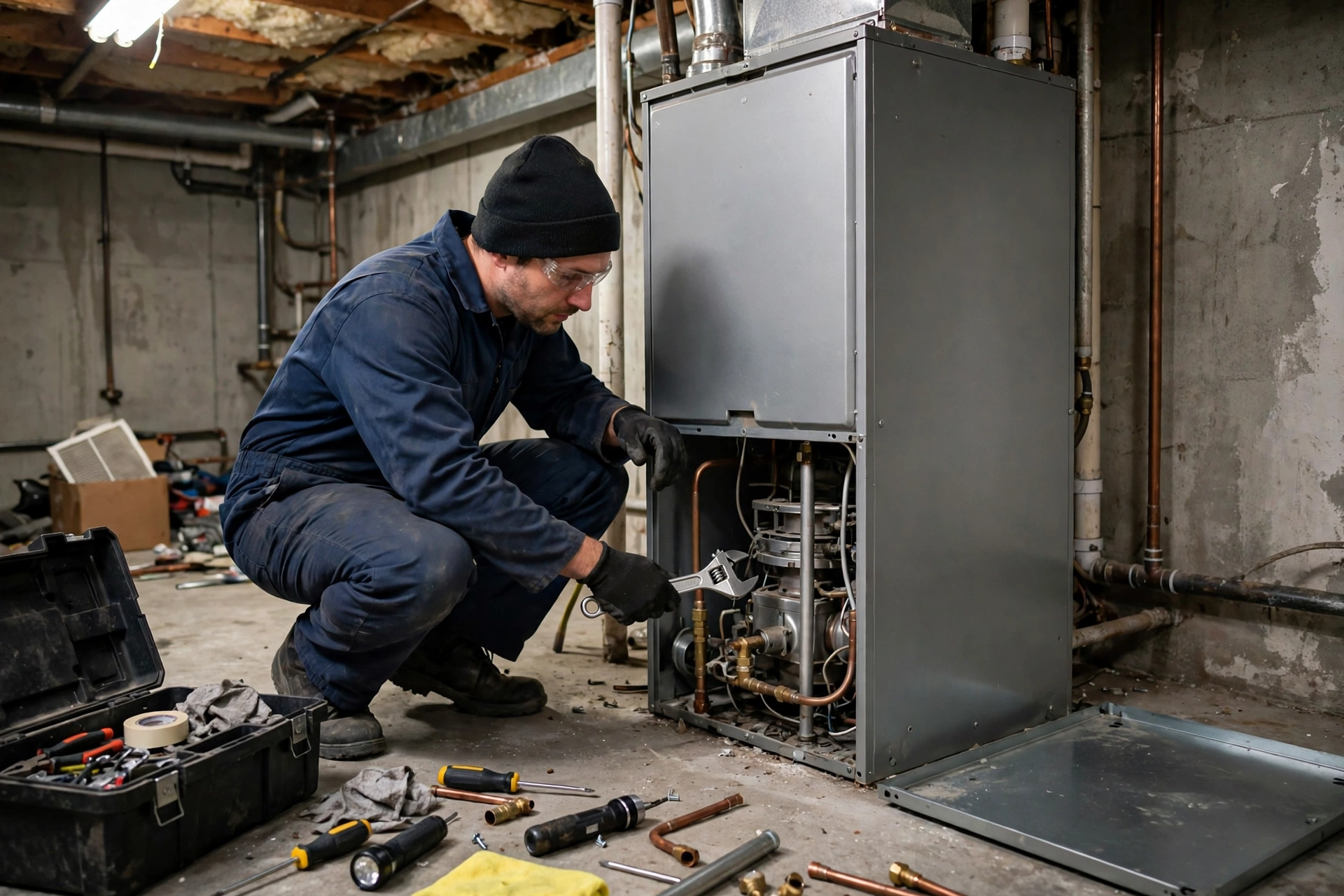
Granite State Furnace Pros serves Rochester with furnace repair, replacement, and maintenance, starting each job with the home rather than the equipment alone. Technicians look at ductwork, thermostat placement, fuel supply, and the rooms that struggle, then explain the options plainly, whether the answer is a repair, a maintenance plan, or a replacement sized to the house as it stands. From downtown to Gonic, the aim is dependable heat through the Rochester winter and a clear plan for keeping it that way.
Downtown Rochester and the Cocheco River Mill District
Downtown Rochester grew around the Cocheco River, and the brick mill buildings and older commercial blocks near Main Street still shape the center of the city. Around them stand worker homes and multi-family houses built for mill families, with dense streets, older windows, and heating systems that have been updated in stages over many decades. Furnaces in this district often serve homes where ductwork was fitted into tight basements and narrow chases, and where additions or converted rooms pull air away from the original living spaces. Airflow balance, rather than raw heating capacity, is frequently the key to comfort here.
The downtown housing mix also means fuel and equipment vary widely, with oil furnaces common in older homes and gas or propane systems in others. A service visit for a downtown Rochester home should therefore begin with a full look: furnace age and condition, burner or ignition health, duct layout, and the rooms that never warm properly. That full look prevents the common mistake of replacing a furnace while leaving the duct problems that caused the complaints untouched, and it gives homeowners a clear picture of what will actually improve comfort.
- Brick mill buildings and worker housing near the Cocheco River
- Tight basement duct paths and converted rooms pulling air unevenly
- Full home review before any repair or replacement recommendation
Gonic and East Rochester Village Heating
Gonic and East Rochester are villages within the city of Rochester, each with its own residential character and its own heating patterns. Gonic, along the Cocheco River, holds village homes and older properties that have been lived in for generations, while East Rochester, toward the Maine border, mixes village housing with newer homes along its main roads. Both villages share a trait that matters for heating: homes built and updated over long periods, with additions, finished rooms, and fuel changes layered onto original structures. A furnace serving a village home may therefore heat a house that looks nothing like the one it was first sized for.
Village heating service in Rochester also means attention to fuel delivery and venting in homes where tanks, lines, and chimneys have served for many years. Oil burner care, fuel line checks, and venting reviews are routine parts of a maintenance visit for these homes, alongside ignition and safety checks that apply to every fuel type. When replacement comes up, sizing to the current footprint, including every addition and finished space, keeps the new system from repeating the old one's shortcomings.
- Village homes in Gonic along the Cocheco River
- East Rochester housing toward the Maine border
- Fuel delivery and venting checks for long serving installations
Midcentury and Newer Rochester Homes on the Corridors
Outside the older core and villages, Rochester has grown along Route 11, Route 125, and the Spaulding Turnpike, with midcentury ranches, split levels, and newer subdivisions that reflect the city's suburban expansion. These homes usually give technicians easier access and more straightforward duct layouts, but they still produce cold rooms: long ranch floor plans with bedrooms far from the furnace, split levels with natural temperature layers, and finished basements that were never part of the original heating calculation. A furnace in a corridor home may run perfectly well while still failing to comfort the far end of the house, which is a duct and balance problem rather than an equipment failure.
Newer Rochester homes also span a wide range of furnace ages, from original units in midcentury houses to recent systems in renovated or newly built properties. Maintenance for these homes centers on filtration, airflow, and safety controls, with attention to whether finished spaces are truly served by the ductwork. Replacement, when it comes, should be sized to the present home and matched to the fuel at the property, since an oversized unit will short cycle and an undersized one will run without ever catching up in deep cold.
- Ranches and split levels along Route 11 and Route 125
- Finished basements checked against original heating calculations
- Right sizing to avoid short cycling or endless running
Rochester Furnace Breakdowns in Sustained Cold
Rochester furnace breakdowns follow the familiar New Hampshire pattern, clustering when sustained cold forces systems to run for hours at a time. The early warnings are worth learning: short cycling, a burner slow to light, new noises from the blower compartment, or a home that takes longer each morning to reach temperature. Homeowners who call when those signs first appear usually get a simpler repair and a calmer appointment than those who wait until the furnace stops on the coldest night, when demand across Strafford County peaks.
If heat does stop, safe first checks can narrow the cause quickly. Confirm the thermostat is set to heat and above room temperature, confirm the breaker has not tripped, confirm an oil tank is not empty, and check the filter for clogging dust. Those checks resolve a meaningful share of no heat calls without a part or a tool. If heat does not return, or if fuel smells, smoke, or burning odors appear, the system should stay off until a technician inspects it, and noting symptoms and which rooms cooled first will speed the diagnosis on arrival.
- Early warnings include short cycling, slow lighting, and slow warm ups
- Thermostat, breaker, fuel, and filter checks come first
- Odors or smoke mean the system stays off until inspected
Sizing a New Furnace for a Rochester Household
A new furnace for a Rochester home should be sized to the household as it lives now, not to the house as it was built or to the capacity plate on the old unit. Insulation improvements, new windows, finished basements, additions, and changes in daytime occupancy all shift the heating load, sometimes substantially, and a sizing approach that ignores those changes will leave the new system mismatched from the first winter. A technician should walk the home, ask about cold rooms and daily patterns, review ductwork, and confirm fuel availability before recommending equipment, because those details shape the choice more than any single product line.
Fuel is a central part of that conversation in Rochester, where heating oil, natural gas, and propane all appear across the city. Each fuel carries its own venting, storage, and maintenance profile, and the right choice depends on what serves the property and what the household prefers for the long term. Planning the replacement in mild weather, rather than under midwinter pressure, gives time to address ductwork, venting, or fuel changes alongside the installation, so the new furnace starts life in a system prepared to support it.
- Sizing to the household as it lives now, not to the old unit
- Insulation, windows, finished spaces, and occupancy factored in
- Fuel, venting, and ductwork addressed alongside installation
The Lilac City From Main Street to the County Line
Rochester's furnace service area stretches from Main Street and the downtown mill district through Gonic and East Rochester to the newer neighborhoods along the highway corridors, with the Cocheco River tying the city's villages and downtown together. The Lilac City nickname reflects a community pride that shows in well kept streets and a downtown that continues to serve as a gathering place, and the housing across that area rewards technicians who know its eras: mill worker homes near the river, village houses with layered histories, and suburban homes whose comfort problems hide in ductwork rather than equipment.
Rochester households also vary widely in daily rhythm, from downtown workers and commuters toward Dover and Portsmouth to families whose days center on the city's own schools and businesses. Some homes run heat around the clock, others sit quiet through the workday, and a furnace maintained for its actual pattern serves both better than one serviced on autopilot. Honest diagnosis, maintenance before winter, and clear repair versus replacement guidance keep Rochester homes warm through a season that asks a great deal of every furnace in the city.
- Main Street and the downtown mill district
- Gonic and East Rochester villages
- Newer neighborhoods along the Route 11 and Route 125 corridors
Rochester Furnace Tune Ups and Cold Weather Readiness
A furnace tune up in Rochester serves a city of distinct parts, from downtown mill era homes along the Cocheco River to village houses in Gonic and East Rochester and newer homes along Route 11, Route 125, and the Spaulding Turnpike. The visit cleans and inspects burner and ignition components, tests safety controls, measures airflow, and reviews ductwork for leakage and blockage, with special attention to the layered histories of village homes, where additions and finished rooms have been added to original structures over many decades. In downtown multi-family houses, the airflow review moves unit by unit where possible, since shared walls and stacked floors distribute heat unevenly without balancing attention.
Fuel readiness is a central part of a Rochester tune up, because heating oil remains common in the older housing while natural gas and propane serve many other homes, and each fuel brings its own checks. Oil visits include burner cleaning and fuel delivery inspection, while all fuels receive venting and safety control review, since a venting fault or a failing safety control is a risk no household should carry into sustained cold. Homeowners help by changing filters on schedule, keeping the furnace area clear, and noting rooms that lag, cycles that seem short or endless, and any new sounds, since those clues guide the technician toward the true cause faster than any generic checklist.
Across successive winters, Rochester tune up records give homeowners a clear view of their furnace's trajectory, showing which parts have been replaced, whether fuel use has shifted, and how ductwork has aged. That view matters most when the repair or replacement question arises for an aging unit, because it replaces guesswork with observed history. For village homeowners in Gonic and East Rochester, where furnaces may have served through generations of family life, that history is often the difference between a confident planned replacement and a panicked midwinter decision. A steady preseason rhythm keeps Rochester furnaces ready for Strafford County cold, year after year.
Rochester homeowners sometimes wonder whether a tune up is worth the trouble when the furnace seems to run fine, and the honest answer is that a quiet furnace can still carry hidden wear. A visit that finds a weakening igniter, a blower motor drawing harder than it should, or a duct leak bleeding heat into an unused basement gives the household a chance to act calmly, with parts available and schedules flexible. Waiting until that wear becomes a failure moves the discovery to a sustained cold stretch, when the house cools quickly, technicians across Strafford County are at their busiest, and a simple repair can feel like a crisis. Regular tune ups also give village homeowners in Gonic and East Rochester a trusted record of their system, which matters when a furnace has served one family for many years and the next generation must decide whether to keep repairing it or plan a replacement.
- Village, downtown, and corridor homes covered in one service pattern
- Fuel delivery, venting, and safety controls checked for every fuel type
- Records across winters that turn replacement into a planned decision
Furnace Questions in Rochester?
Tell us what your furnace is doing and where you are, and we will help arrange the next step.
How much does furnace repair in Rochester cost?
Repair pricing depends on the fault, the parts needed, the furnace age and fuel type, and how accessible the unit is. A diagnosis comes first, with options explained before work begins so there are no surprises.
Do you service furnaces in Gonic and East Rochester?
Yes, both villages are fully covered, including older village homes with layered additions and varied fuel types.
Why do far bedrooms stay cold in my Rochester ranch?
Long duct runs, duct leakage, register placement, and heat loss along the way often leave far bedrooms cool. An airflow review can show whether balancing, duct repair, or equipment sizing is the real fix.
When should I schedule furnace maintenance in Rochester?
Before sustained cold arrives is best, so worn parts and needed repairs are handled calmly. A yearly visit keeps ignition, safety controls, and airflow ready for the long heating season.
Do you work on oil furnaces in Rochester?
Yes, oil furnaces are common in Rochester's older housing and are fully covered, including burner service and fuel delivery checks, alongside gas and propane systems.
What causes a furnace to short cycle?
Short cycling can result from an oversized unit, a clogged filter, thermostat placement problems, or restricted airflow from duct issues. A technician identifies the cause first, since each cause needs a different correction.
Furnace Questions in Rochester, Answered
Not seeing your question? Request service and tell us what your furnace is doing.
Call (855) 625-1748