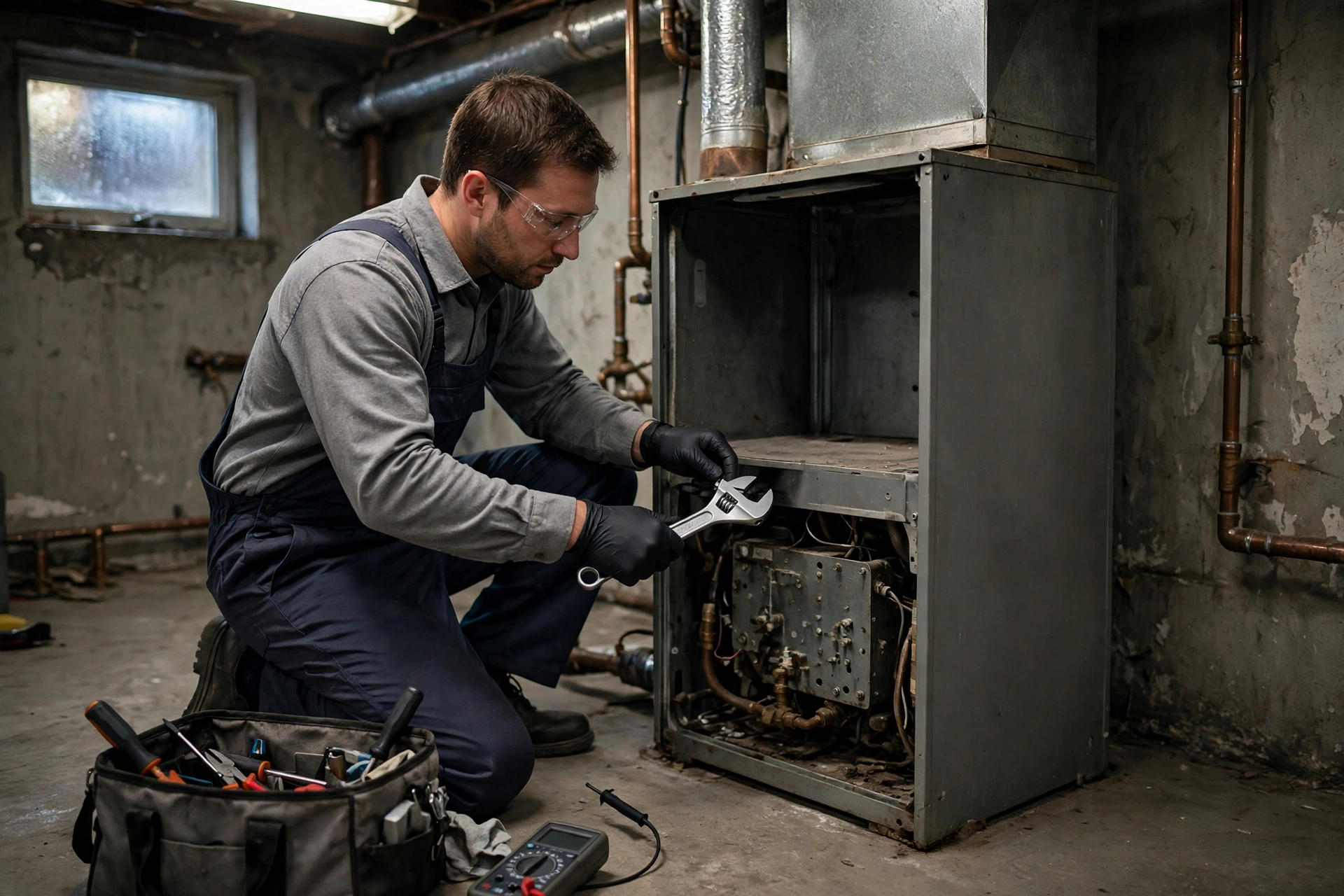
Furnace Repair
Furnace repair in New Hampshire covers diagnosis and repair of gas and oil furnaces that will not start, will …
Learn more
New Hampshire furnaces work longer and harder than heating systems in milder regions, running through months of cold nights, damp shoulder seasons, and repeated freeze and thaw cycles. A tune-up gives that hardworking system a careful reset before winter demand peaks, catching worn parts, dirty burners, and airflow problems while they are still small. Households that treat maintenance as a seasonal habit, rather than a response to breakdown, tend to face fewer no heat nights and fewer surprise repairs when outdoor weather turns harsh.
Older housing stock adds another reason for regular attention. Dust settles inside cabinets during summer, oil burners accumulate residue, filters clog faster in homes with pets or wood stoves, and ductwork routed through cold attics or stone basements changes how air moves. A tune-up looks at the whole heating path, from thermostat call to warm air at the farthest vent, so small drifts in performance do not quietly grow into uneven rooms, rising fuel use, or a burner that locks out on the coldest night of the year.
Granite State Furnace Pros performs maintenance as a thorough inspection and test, not a quick glance. Burners are cleaned and checked, ignition parts are tested, filters and blowers are checked, controls are confirmed, and safety devices are verified under real heating cycles. The household receives a clear picture of what looks strong, what looks worn, and what to plan for, which makes future repair or replacement decisions easier and far less rushed.
A furnace that sits idle through summer can develop problems that only appear under sustained winter load. Dust coats flame sensors, ignition parts weaken, belts and motors stiffen, and oil nozzles develop buildup that changes how fuel burns. Those faults may not show during a brief autumn test, but they often surface during a week of continuous cold, when the furnace cycles constantly and any weak link gets tested again and again. A tune-up before that strain arrives gives each part a chance to prove itself under controlled conditions.
Seasonal maintenance also protects comfort in homes where heating demand varies room by room. A tune-up checks airflow to far rooms, confirms that the blower moves air strongly enough for long duct runs, and verifies that the thermostat reads the home accurately. When those elements drift, the household often compensates by raising the thermostat, which asks the furnace to work harder without fixing the underlying imbalance. Restoring airflow and control accuracy first keeps heat even and reduces unnecessary strain on the whole system.
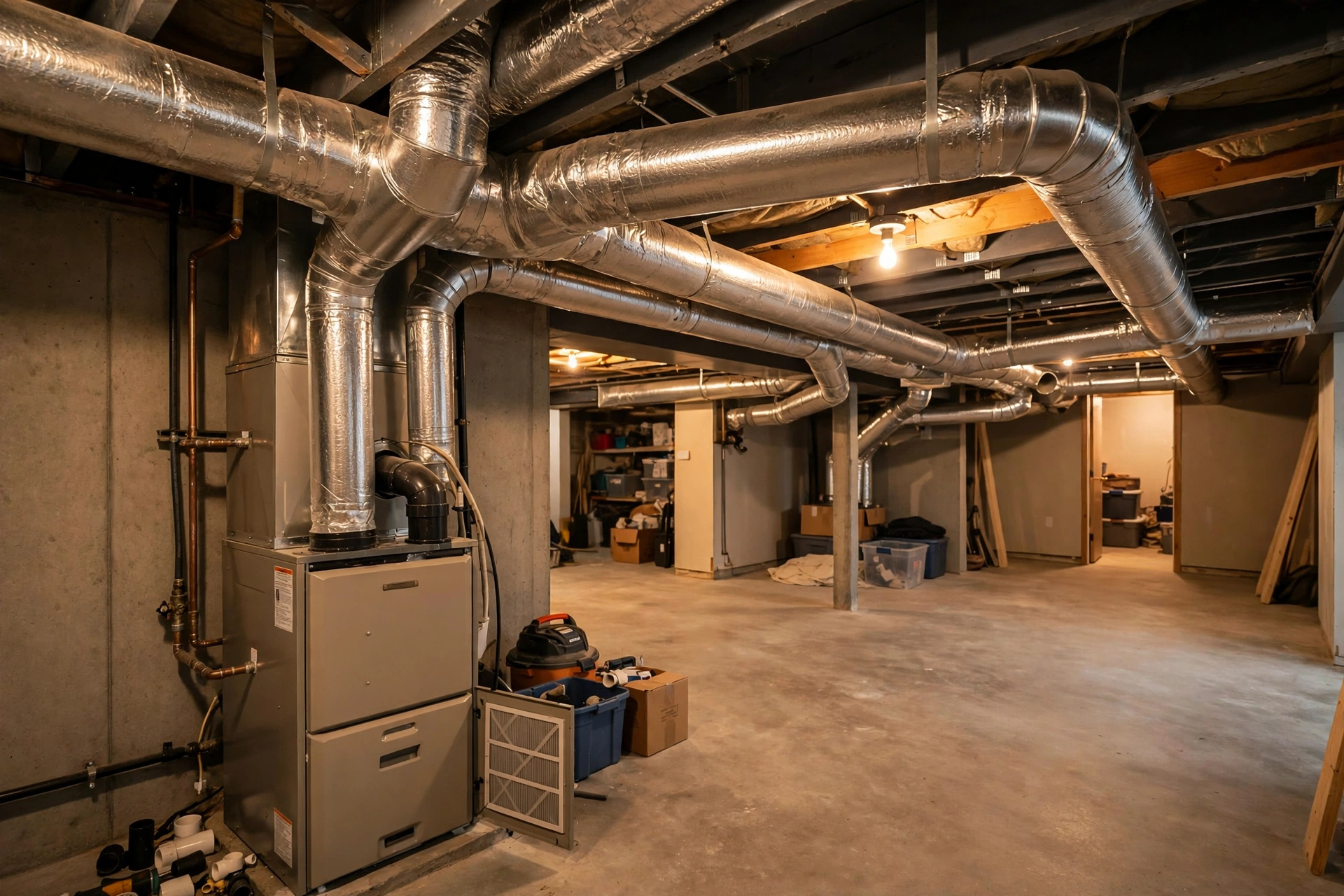
A thorough tune-up follows the heating path in order. It begins with the thermostat and controls, confirming that calls for heat reach the furnace correctly and that the system starts, runs, and shuts down in the right sequence. Burner and ignition parts come next, with cleaning for gas burners and careful attention to nozzle, filter, and flame quality on oil units. Blower components, belts, and motors are inspected for wear, dust, and noise, and filters are checked or replaced so return air flows freely.
Safety devices and venting receive equal attention, because a furnace must not only heat well but also vent correctly. Limit switches, flame sensors, and other controls are tested, vent connections are inspected for leaks or blockage, and condensate drains are checked where the system uses them. The visit ends with a full heating cycle test, measuring temperature rise, listening for abnormal sounds, and confirming warm air at vents throughout the home, so the household knows the system was tested as it will actually run in winter.
Oil furnaces need specific seasonal care that gas units do not, and New Hampshire homes with oil heat benefit most when that care arrives before winter. Fuel filters trap sediment and water over time, nozzles wear and change spray patterns, and burner chambers collect soot that insulates the heat exchanger and reduces clean heat transfer. A tune-up replaces the filter, inspects the nozzle, cleans the burner assembly, and checks flame quality, so the furnace lights promptly and burns steadily instead of rumbling, smoking, or locking out during a cold spell.
Fuel delivery deserves a look during the same visit. Tank condition, fuel lines through cold basements, and venting routes that can collect snow or ice all affect whether an oil furnace runs reliably when demand is highest. A technician notes any line routing, dampness, or vent clearance concern and explains what to watch for, including fuel odor, soot around the burner, or repeated lockouts. Those observations help the household plan fuel deliveries and small corrections before winter, rather than discovering a fuel problem during a storm.
Filters look simple, yet they shape everything downstream. A clogged filter starves the furnace of return air, forces the blower to work harder, overheats the heat exchanger, and can trip safety controls that shut the system down. Homes with older ductwork feel that effect more sharply, because narrow runs, long attic routes, and additions already limit airflow. A tune-up therefore treats filter condition as a diagnostic clue, not a routine chore, and pairs it with vent and duct checks that show where air is lost or blocked.
Households can support airflow between visits by keeping vents open and unblocked, especially in rooms that already heat slowly. Furniture, rugs, and stored items over floor vents quietly undo the benefit of a tune-up, and closed vents in unused rooms can unbalance pressure across the whole duct system. Noting which rooms stay cold after a tune-up helps distinguish a filter or blower issue from a duct layout issue, and that distinction guides whether the next step is a simple adjustment or a duct repair.
Timing a tune-up for late summer or early autumn gives the household room to act on findings before winter demand arrives. If a part looks worn, a vent needs rerouting, or a duct run needs sealing, that work can be scheduled calmly instead of competing with emergency calls during a cold snap. Early timing also means the furnace enters heating season clean and tested, with filters fresh and controls confirmed, rather than carrying summer dust and wear into its hardest months.
Between tune-ups, simple household habits keep the system in better shape. Listening for new sounds at startup, watching for uneven rooms, checking that outdoor vents stay clear of snow and leaves, and replacing filters on schedule all provide early warning. When a household notices a change and mentions it at the next tune-up, the technician can trace whether that change came from a part, airflow, fuel, or control issue, and the visit becomes a focused check rather than a search for an unknown fault.
After a tune-up, a furnace should start cleanly, run with a steadier flame and quieter blower, and reach thermostat settings without the long struggles that worn or dirty parts once caused. Households often notice the change most in far rooms, where restored airflow finally delivers warm air that previously faded along the duct run. That improvement may appear gradually over the first few cycles as the system settles, especially in older homes where dust and residue had built up over more than one season.
The visit should also leave the household with a short list of observations to carry forward, including parts that look worn, filters that need attention, vents that need clearance, and rooms that still heat unevenly. Those notes turn the next tune-up into a focused check rather than a fresh search, and they help the household decide whether a future repair is urgent or can be planned calmly. Keeping that list near the furnace, along with filter sizes and service dates, makes each seasonal visit faster and more useful.
Describe what your system is doing and we will help arrange the next step.
Late summer or early autumn works well, because findings can be addressed before sustained cold arrives. A tune-up at that time leaves the furnace clean, tested, and ready for months of continuous winter operation.
Oil tune-ups add fuel filter replacement, nozzle inspection, burner cleaning, and flame quality checks to the standard inspection. Those steps handle soot, sediment, and spray changes that gas furnaces do not face in the same way.
A tune-up can fix cold rooms caused by clogged filters, weak airflow, or control faults, and it can identify cold rooms caused by duct leaks or layout limits. That diagnosis matters, because duct problems need a different repair than a furnace adjustment.
Filter timing depends on filter type, household dust, pets, wood stove use, and how long the furnace runs each season. Checking the filter monthly during heating season and replacing it when it looks loaded keeps airflow strong between tune-ups.
Maintenance cost depends on system type, fuel type, filter needs, and the scope of cleaning and testing required. Oil systems and systems with harder access or extra duct checks can involve more work than a straightforward gas furnace tune-up.
A tune-up reduces breakdown risk by catching worn ignition parts, dirty burners, airflow limits, and safety faults before winter strain exposes them. It cannot promise that no part will ever fail, but it removes many of the small faults that cause no heat calls.
Not seeing your question? Request service and describe what your system is doing.
Call (855) 625-1748Furnace repair in New Hampshire covers diagnosis and repair of gas and oil furnaces that will not start, will …
Learn more
Furnace installation in New Hampshire means selecting a correctly sized gas or oil furnace for the home, remov…
Learn more
Boiler repair in New Hampshire covers diagnosis and repair of hot water and steam boilers that serve radiators…
Learn more