Furnace Repair in Manchester, NH
Manchester is the largest city in New Hampshire, a former mill city on the Merrimack River whose brick Millyard buildings still anchor downtown and whose neighborhoods spread out along Elm Street, the West Side, and the North End. The housing here tells the story of that growth, with converted mill buildings and tall triple deckers near the river, Victorian homes and early twentieth century houses in the North End, and postwar capes, ranches, and newer subdivisions farther out toward Massabesic Lake and the edge of town. Each style heats differently, and a furnace plan that works for a compact downtown condo will not always suit a drafty Victorian or a sprawling ranch with long duct runs.
Serving Manchester, NH 03101
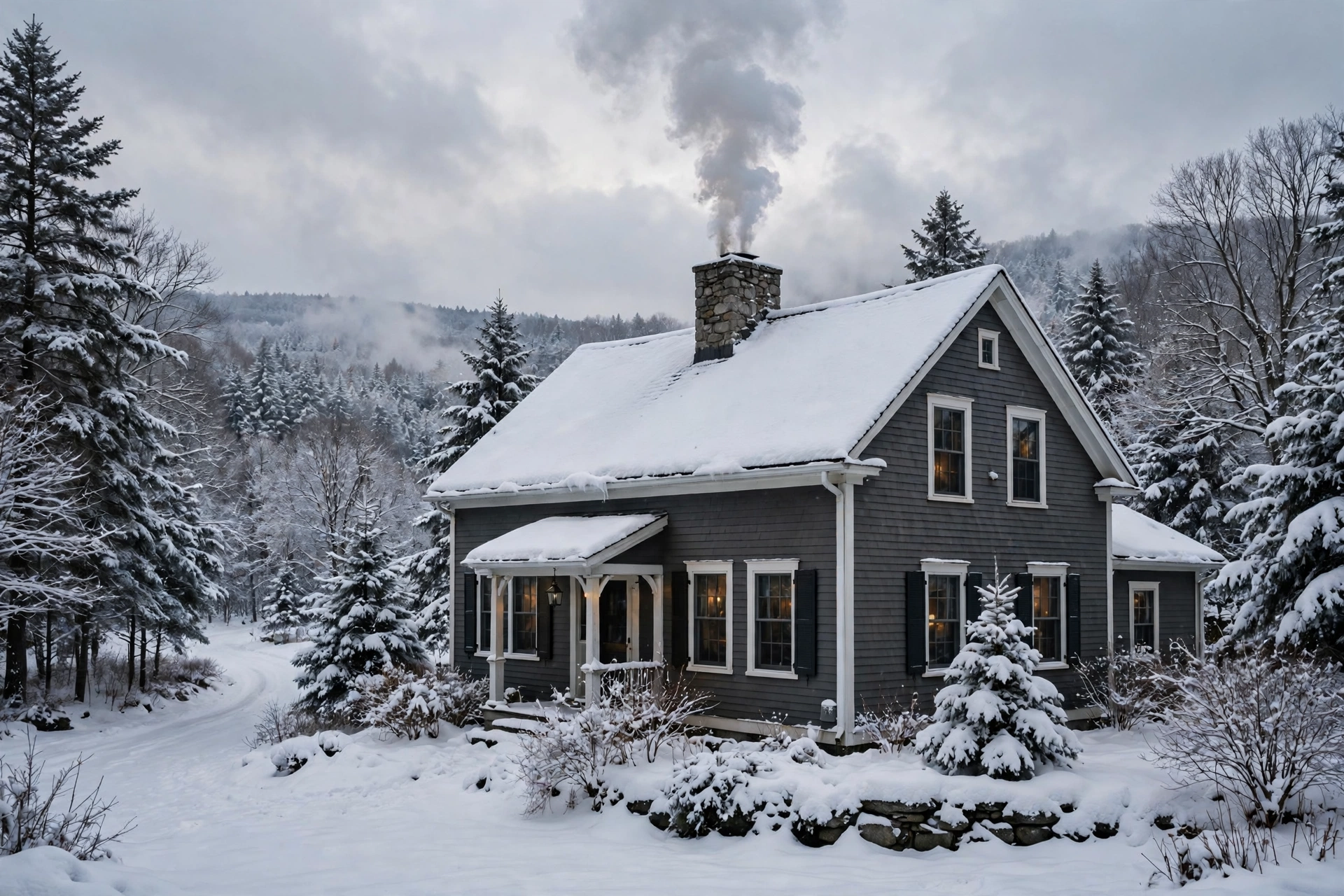
Winters in Manchester are long and cold, and the heating season stretches across much of the year, which puts steady demand on every part of a furnace. Heating oil remains common in older Manchester homes, while natural gas and propane serve many others, and each fuel type brings its own maintenance needs, venting considerations, and signs of wear. Freeze and thaw cycles add another strain, as joints, seals, and ductwork expand and contract through the season, and a small problem left alone in autumn can become a no heat call in the middle of a cold snap. That is why local furnace care here is less about one quick fix and more about understanding the age of the home, the type of system, and the way the household actually uses heat from room to room.
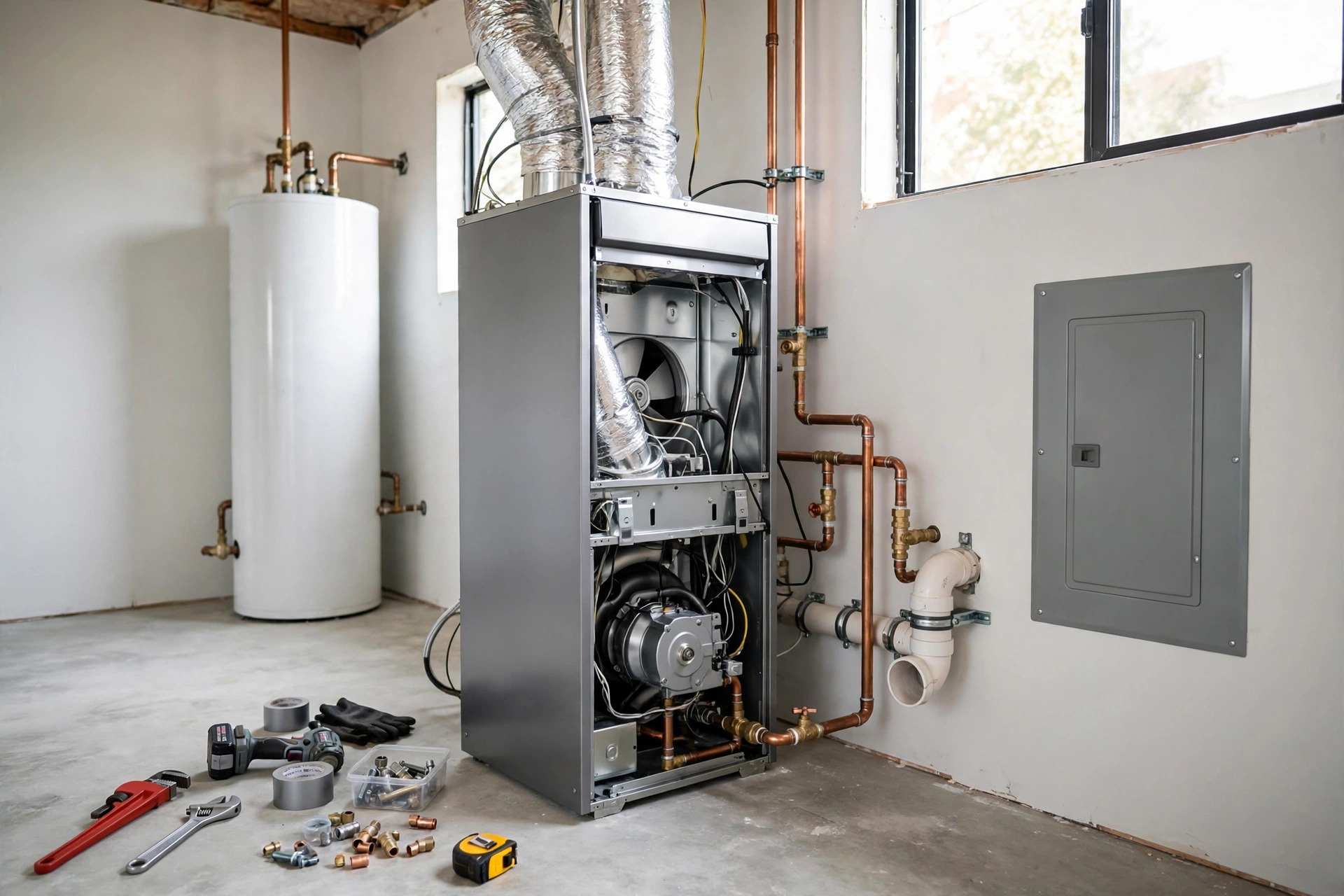
Granite State Furnace Pros serves Manchester homes with furnace repair, furnace replacement, and seasonal maintenance, along with help choosing equipment when an old unit is ready to retire. Technicians look at the whole picture, including ductwork condition, thermostat placement, airflow to far rooms, and fuel supply, so the recommendation fits the house rather than forcing the house to fit a single product. Whether you live in a Millyard loft, a triple decker on the West Side, or a family home in the North End, the goal is the same: steady, even warmth through the coldest months, with fewer surprises and a clear plan for what comes next.
Heating for Millyard Lofts and Triple Decker Homes
The Millyard district along the Merrimack River is one of the most distinctive places to live in New Hampshire, with massive brick mill buildings that once powered the Amoskeag mills now holding apartments, offices, and loft style homes. These buildings bring character in abundance, with high ceilings, large windows, exposed brick, and long open floor plans, but they also bring heating challenges that newer construction rarely faces. Tall ceilings let warm air rise away from where people sit, large windows lose heat on windy nights, and shared walls and converted spaces can leave some rooms comfortable while others stay stubbornly cool. A furnace serving a mill conversion needs to move air effectively through ductwork that was often fitted around existing structure, and balancing that airflow matters as much as the furnace itself.
Triple deckers, another Manchester signature, present a different version of the same puzzle. These three story homes often house separate households on each floor, and heat that rises from the lower units can leave the top floor overheated while the ground floor feels chilly, or the reverse when a single system struggles to push air evenly through the whole stack. Older triple deckers may also carry a mix of heating history, with original radiators or piping from an earlier era sitting alongside newer forced air equipment. Careful attention to duct sizing, register placement, and thermostat location helps even out those differences, and regular maintenance keeps an aging system running through winters that ask a great deal of it.
- Mill loft heating shaped by high ceilings, large windows, and converted ductwork
- Triple decker comfort balanced across three floors with uneven heat patterns
- Airflow checks for far rooms, top floors, and converted living spaces
North End Victorians and Older Manchester Houses
The North End holds some of Manchester's most handsome older housing, with Victorian homes, early twentieth century colonials, and gracious streets that have been lived in for generations. These houses were built in an era before modern insulation and air sealing, and many still carry their original bones, including plaster walls, wood windows, and basements that run cool and damp. A furnace in a North End Victorian works against that history every winter, pushing heat through rooms with high ceilings and generous proportions, and any weakness in the system shows up as cold corners, drafty hallways, or a second floor that never quite catches up to the first. The charm of these homes is real, and so is the heating load they place on older equipment.
Older Manchester houses also tend to have older furnaces, and age alone changes the service conversation. Parts wear, heat exchangers fatigue, and controls that once ran reliably begin to fail in cold weather when the system cycles hardest. Maintenance visits for these homes focus on safety checks, cleaning, and catching worn components before they fail, while replacement conversations weigh the age of the unit, the condition of the ductwork, and the fuel available at the property. The right choice is rarely the largest unit on offer; it is the one sized to the house as it stands today, with its insulation, windows, and layout taken into account.
- Victorian and early twentieth century homes with high ceilings and older envelopes
- Safety checks and worn component replacement for aging furnace equipment
- Sizing based on the house as it stands, not on rules of thumb
Furnace Repair When a Manchester Cold Snap Arrives
The hardest furnace failures in Manchester tend to arrive with the coldest weather, because that is when systems run longest and cycle most often. A furnace that limped along in mild autumn weather can stop outright when a stretch of deep cold settles over Hillsborough County, and the signs often appear in the days before the failure: short cycling, a burner that struggles to light, new noises from the blower, rooms that cool faster than they used to, or a thermostat that calls for heat without the house responding. Paying attention to those early warnings and arranging service before the next cold stretch can be the difference between a planned repair and an emergency no heat situation.
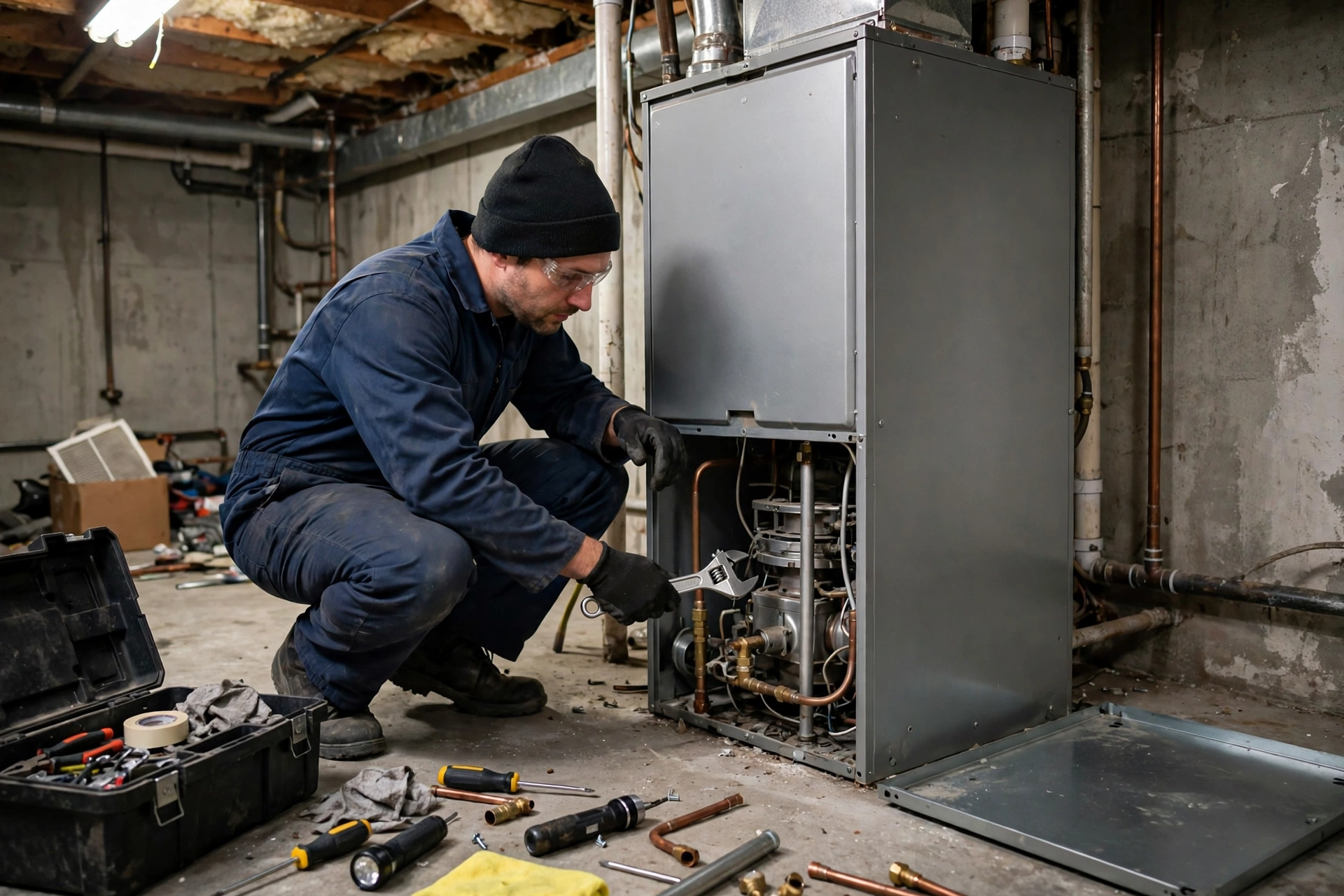
When a Manchester furnace does stop, the first steps a homeowner can take are simple and safe. Check that the thermostat is set to heat and to a temperature above the current room temperature, check that the breaker for the furnace has not tripped, and for oil heated homes, check that the tank is not empty. A clogged filter can also choke airflow enough to shut a system down, so a filter that has not been changed in months is worth a look. Beyond those basics, burner, ignition, control, and fuel delivery problems belong to a technician, and forcing a struggling system to keep running can turn a modest repair into a larger one. A clear description of what changed, when it started, and which rooms are affected helps a technician diagnose the problem faster on arrival.
- Early warning signs include short cycling, hard starts, new noises, and uneven rooms
- Safe homeowner checks cover thermostat settings, breakers, fuel supply, and filters
- Burner, ignition, and control problems are technician work, not do it yourself repairs
Furnace Replacement Planning for Queen City Homes
Every furnace reaches a point where replacement deserves an honest conversation, and in Manchester that point often arrives in homes where the unit has served through many long winters. Frequent repairs, rising fuel use without a change in household habits, rooms that never hold temperature, and a furnace that has simply outlived its expected service life are all reasons to talk about replacement rather than another patch. The conversation should also consider the house itself, since insulation upgrades, new windows, or a finished basement can change the heating load enough that the old sizing no longer fits. A replacement planned in advance, during milder weather, is almost always smoother than one forced by a midwinter breakdown.
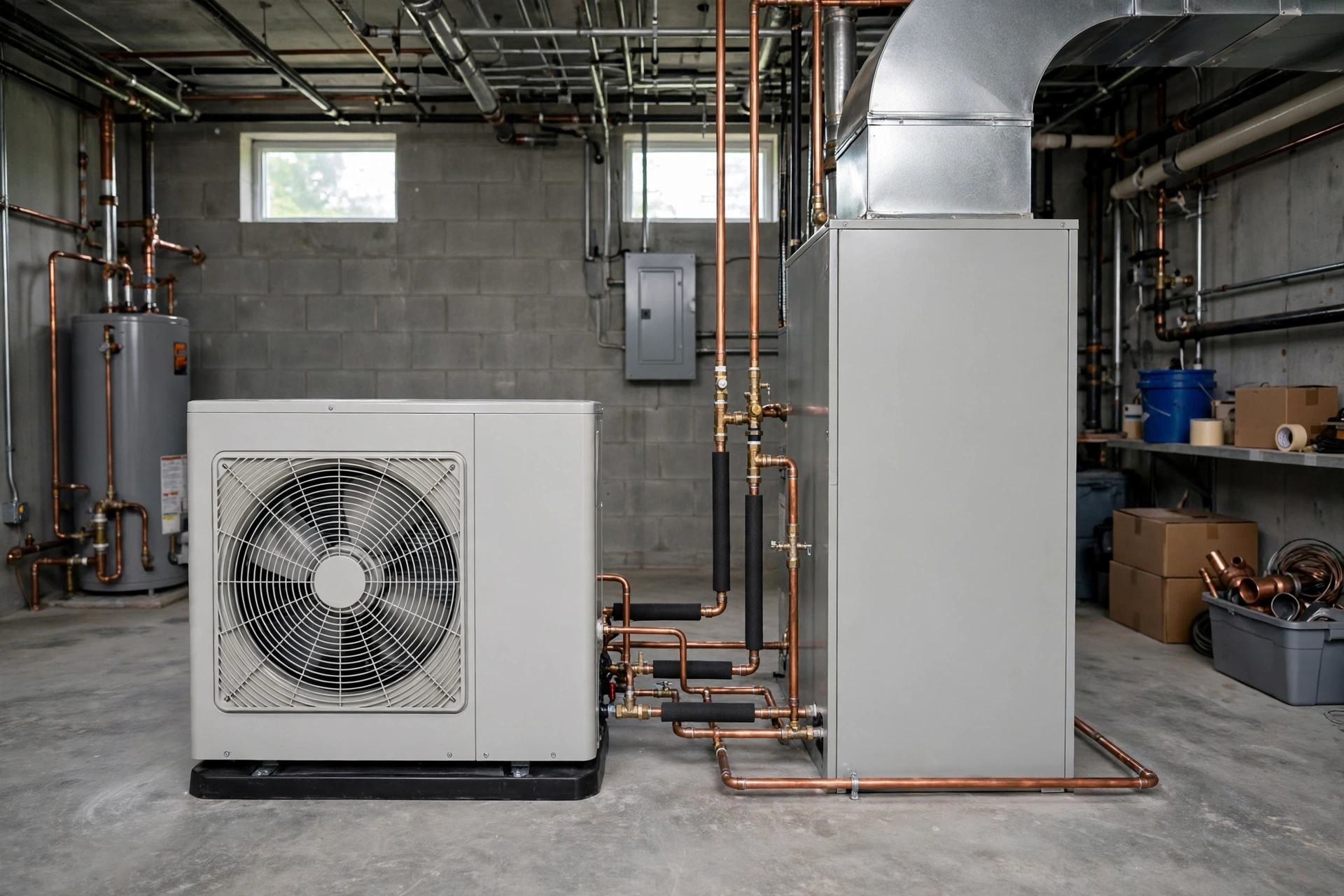
Choosing a new furnace for a Manchester home involves more than picking a model. Fuel availability matters, since some neighborhoods have natural gas service while others rely on heating oil or propane, and each fuel shapes venting, storage, and maintenance. Ductwork condition matters too, because a new furnace connected to leaky or undersized ducts will never deliver the comfort it should. Household patterns matter as well, including whether rooms sit empty during the day, whether anyone works from home, and whether allergies or dust make filtration a priority. Granite State Furnace Pros walks through those factors with Manchester homeowners so the new system fits the home, the fuel, and the way the family lives in it.
- Replacement signals include frequent repairs, uneven heat, and an aging unit
- Fuel type, ductwork condition, and household patterns shape the equipment choice
- Planning ahead in mild weather beats a forced midwinter replacement
Seasonal Maintenance Before the Long Heating Season
Manchester's heating season is long enough that skipping maintenance is a gamble with poor odds. A seasonal maintenance visit cleans and inspects the components that collect dust and wear over a summer of idleness, checks ignition and burner operation, tests safety controls, and looks for the small problems that cold weather turns into big ones. Filters get attention, airflow gets measured, and the technician can flag parts that are wearing thin while there is still time to address them calmly. For oil furnaces, maintenance also covers the burner assembly and fuel delivery components that gas systems do not have, which is one more reason oil heated Manchester homes benefit from a regular service rhythm.
The best time for maintenance is before the sustained cold arrives, when schedules are flexible and any recommended repair can be handled without urgency. Homeowners can support that visit by keeping the area around the furnace clear, noting any rooms that heat unevenly, and mentioning new noises or smells that appeared during the last heating season. Between visits, regular filter changes are the single most useful homeowner habit, since a clean filter protects airflow, keeps dust out of the blower, and helps the whole system run with less strain. A furnace that is maintained year after year tends to run more steadily, break down less often, and give clearer warning when replacement planning should begin.
- Maintenance covers cleaning, ignition checks, safety controls, and airflow
- Oil furnaces need burner and fuel delivery attention that gas systems do not
- Regular filter changes are the most useful habit between professional visits
Neighborhoods Served Across Manchester and Nearby Hillsborough County
Furnace service from Granite State Furnace Pros reaches across Manchester, from downtown and the Millyard to the North End, the West Side, the South End, and Rimmon Heights, as well as the residential streets that run toward Massabesic Lake and the surrounding Hillsborough County communities. Each neighborhood brings its own housing mix, and technicians arrive familiar with the patterns: mill conversions and apartments near Elm Street, triple deckers and modest family homes on the West Side, larger Victorians and colonials in the North End, and postwar and newer homes on the edges of the city. That local familiarity shortens diagnosis, since the likely duct layouts, fuel types, and furnace ages of a neighborhood are already understood before the basement door opens.
Manchester sits at the center of a busy southern New Hampshire corridor, with Interstate 93 running through the city, Route 101 crossing east to west, and the Everett Turnpike connecting the city to Nashua and the Massachusetts border. Homes along those corridors share the same winter reality: long cold months, freeze and thaw cycles, and heating systems that must perform day after day. Whether the call comes from a downtown loft, a West Side triple decker, or a family home near the lake, the service approach stays consistent: diagnose carefully, explain the options plainly, and leave the home warmer and safer than it was found.
- Downtown, the Millyard, the North End, the West Side, and the South End
- Rimmon Heights and the residential streets toward Massabesic Lake
- Nearby Hillsborough County communities along the Interstate 93 corridor
Manchester Furnace Tune Ups and Winter Reliability
A furnace tune up in Manchester begins with the realities of the city's housing, since a visit to a Millyard loft, a West Side triple decker, and a North End Victorian each call for different attention. The technician cleans and inspects the burner and ignition components, tests safety controls, checks airflow through the ductwork, and looks for worn parts that cold weather will finish off. In loft spaces, that airflow check matters most, because high ceilings and large windows pull heat away from living level, while in triple deckers the check moves floor by floor, since heat that rises through the stack can leave one household comfortable and another chilly.
Timing shapes the value of the visit, and Manchester homeowners benefit most when tune ups happen before sustained cold settles over Hillsborough County. A visit in mild weather leaves room to order a part, seal a duct leak, or move a thermostat that reads a drafty hallway instead of the living space, all without urgency. Homeowners can help by changing filters on a regular rhythm, keeping the furnace area clear, and noting rooms that lag, noises that are new, and any smell that was not there last winter, since those observations guide the technician straight to the likely cause.
Over several winters, tune up records become a useful history for the house, showing which parts have been replaced, how the furnace has aged, and when replacement planning should begin. That history is especially valuable in Manchester's older homes, where a furnace may have served through many long seasons and where the decision between another repair and a planned replacement deserves evidence rather than guesswork. A steady maintenance rhythm keeps the system safer, steadier, and better understood, which is exactly what a long Manchester winter requires.
- Burner, ignition, safety, and airflow checks in one visit
- Floor by floor balance for triple deckers and loft spaces
- Worn parts flagged while mild weather allows calm repair
Furnace Questions in Manchester?
Tell us what your furnace is doing and where you are, and we will help arrange the next step.
How much does furnace repair in Manchester usually cost?
Repair pricing depends on the problem found, the parts needed, the age and fuel type of the furnace, and how accessible the unit is. A technician diagnoses the fault first and explains the options before work begins, so you understand what the repair involves and why it is needed.
Should I repair or replace my old Manchester furnace?
The answer depends on the age of the unit, how often it has needed repair, whether rooms heat evenly, and the condition of your ductwork. A furnace with frequent breakdowns or steadily rising fuel use is often a better replacement candidate, while a younger unit with a single failed part is usually worth repairing.
How often should a furnace be maintained in New Hampshire?
Most furnaces benefit from a professional maintenance visit once a year, ideally before the sustained cold arrives. Oil furnaces in particular reward that rhythm, since burner and fuel delivery components collect soot and wear that a yearly cleaning and inspection catches early.
What should I check if my Manchester furnace stops heating?
Check that the thermostat is set to heat and above room temperature, that the furnace breaker has not tripped, that an oil tank is not empty, and that the filter is not clogged. If those checks do not restore heat, or if you smell fuel or hear unusual noises, leave the system off and arrange for a technician.
Why are some rooms in my Manchester home colder than others?
Uneven rooms often trace back to ductwork layout, register placement, thermostat location, or heat loss through older windows and walls. Mill conversions and triple deckers are especially prone to this, since their layouts and shared walls distribute air unevenly without balancing attention.
Do you service oil furnaces in Manchester?
Yes, oil furnaces are common in older Manchester homes and are fully covered, including burner service, fuel delivery checks, and safety inspections, alongside natural gas and propane systems found elsewhere in the city.
Furnace Questions in Manchester, Answered
Not seeing your question? Request service and tell us what your furnace is doing.
Call (855) 625-1748Nearby New Hampshire Towns and Cities