Furnace Repair
Furnace repair in New Hampshire covers diagnosis and repair of gas and oil furnaces that will not start, will …
Learn more
Heat pumps have become a familiar sight in New Hampshire homes, serving as a primary heat source in some houses and as a supplement to a furnace or boiler in others. They move heat rather than creating it by burning fuel, which makes them efficient in mild weather and more demanding when winter deepens. A heat pump that heats well in autumn may struggle during a long cold spell, especially if outdoor coils ice up, airflow weakens, or a control fault prevents the system from shifting into its cold weather operating mode.
New Hampshire conditions shape heat pump faults in particular ways. Snow drifts against outdoor units, ice builds on coils during freeze and thaw cycles, and damp cold air clings to coastal and valley locations. Older homes add ductless indoor heads in rooms that were hard to heat with existing ductwork, and those heads depend on clean filters, clear airflow, and correct refrigerant flow to deliver steady warmth. When any part of that chain weakens, rooms feel drafty, the system runs longer, and auxiliary heat may take over more often than it should.
Granite State Furnace Pros diagnoses heat pumps as a complete system, indoor and outdoor together. Refrigerant flow, defrost operation, airflow, electrical controls, and thermostat settings are tested in sequence, because a symptom like weak heat can come from icing, a dirty coil, low airflow, or a reversing valve fault. Repair aims to restore steady heating through cold weather, not just to clear ice for a day, so the household understands what caused the problem and what to watch for during the next freeze.
Weak heating is the most common heat pump complaint in winter, and it can mean several different things. A system that blows lukewarm air, runs without rest yet never reaches the thermostat setting, or leaves far rooms cold may suffer from restricted airflow, a dirty outdoor coil, refrigerant trouble, or a defrost cycle that never completes. Noting when the problem appears helps diagnosis, because faults that worsen in damp cold differ from faults that appear in all weather and point more directly to controls or airflow.
Other symptoms carry their own clues. Ice that never clears from the outdoor coil, a unit that stays locked in cooling mode, loud buzzing or clicking at startup, water pooling around an indoor head, or a system that trips a breaker all signal specific failures. A heat pump that frequently switches to auxiliary heat may still keep the house warm, but that pattern often hides an outdoor unit problem that deserves attention before the coldest weeks arrive and auxiliary heat becomes the main source by default.
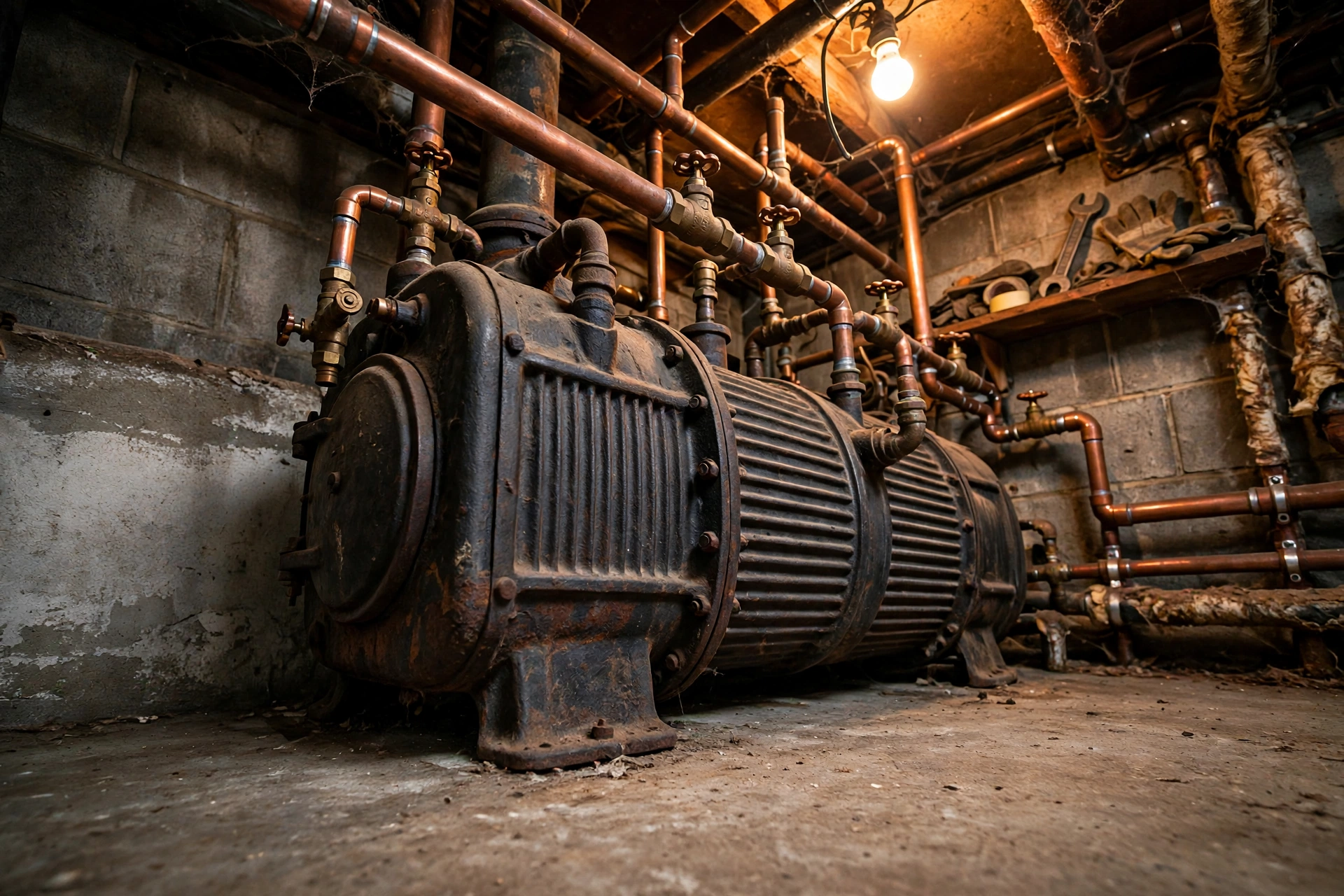
Outdoor units live exposed to everything New Hampshire winter delivers, including snow, ice, wind driven rain, and freeze and thaw cycles that coat coils repeatedly. A healthy defrost cycle melts coil ice on schedule, drains melt water away, and returns the system to heating without drama. When defrost sensors, controls, or drainage fail, ice builds into a thick layer that blocks airflow, reduces heat transfer, and forces the system to work harder for less warmth. Clearing ice without fixing the defrost fault only buys a short reprieve before the same buildup returns.
Placement and clearance matter just as much as the defrost control itself. Snow piled against an outdoor unit, shrubs grown close to the cabinet, leaves packed around the base, or melt water that refreezes under the unit can all choke airflow or trap ice. A repair visit therefore checks the pad, drainage path, coil condition, fan operation, and defrost sequence together, and explains simple clearance habits that help the unit shed snow and ice between visits. Raising awareness of clearance often prevents repeat icing calls in the same winter.
Ductless heat pumps heat room by room, which makes them valuable in older New Hampshire homes where ductwork never reached an attic bedroom, a converted porch, or a new addition. Each indoor head depends on its own filter, fan, and airflow path, so a dirty filter or blocked louver in one room can leave that room cold while neighboring heads work normally. Households sometimes mistake that local fault for a whole system failure, when the outdoor unit is actually running well and only one head needs attention.
Repair work on ductless systems checks each head in turn, including filter condition, fan operation, drain flow, and whether the head responds correctly to its remote or wall control. Refrigerant flow to each head is also considered, because a restriction or leak can starve one head while others heat normally. Balancing those checks across all heads gives a complete picture, and it helps the household understand which rooms to watch and which simple filter habits keep the system delivering even heat.
Refrigerant, airflow, and controls make up the core of heat pump operation, and a fault in any one area can mimic a fault in another. Low refrigerant reduces heat transfer and can cause coil icing, while restricted airflow from dirty filters or blocked coils produces similar icing and weak heat. Electrical faults, including failing capacitors, contactors, or control boards, can prevent startup, interrupt defrost, or stop the reversing valve from switching modes. Testing each area in order prevents replacing a refrigerant part when the real fault was airflow, or replacing a control when the real fault was a frozen coil.
A careful repair visit measures system behavior rather than relying on a single reading. Technicians observe startup, listen for compressor and fan sounds, check coil condition and airflow, test defrost operation, and confirm that indoor and outdoor units communicate correctly through mode changes. Those observations, combined with thermostat history and the household's description of when heat faded, usually narrow the fault to one system area and support a repair that holds through repeated cold cycles.
Households can support heat pump reliability with habits that cost little effort. Keeping snow and leaves clear of the outdoor unit, changing or cleaning indoor filters on schedule, keeping furniture clear of indoor heads, and avoiding frequent mode changes between heating and cooling all help the system run smoothly. During a hard freeze, setting a steady thermostat temperature rather than swinging it widely also helps, because heat pumps recover slowly from deep setbacks in cold weather and may call for auxiliary heat to catch up.
Watching for change matters more than watching for perfection. If a previously reliable system begins icing more often, runs longer for the same comfort, or leans on auxiliary heat noticeably more, those changes deserve a diagnostic visit before the next cold spell. Early diagnosis often finds a defrost sensor, airflow blockage, or control fault that is straightforward to correct, while waiting until the system stops heating entirely can turn a small repair into a larger one during the busiest part of winter.
After heat pump repair, the real test arrives with the next stretch of cold damp weather, when icing, defrost, and airflow all face sustained demand. The outdoor unit should clear frost on schedule, drain melt water away without refreezing into a thick sheet, and return to heating without long pauses. Indoor heads should deliver warm air steadily, without drips, unusual noises, or rooms that fall behind while others feel comfortable. Watching those behaviors over several cold days gives a truer verdict than a single mild weather test.
Households can help that test by keeping snow and leaves clear of the outdoor unit, keeping indoor filters clean, and avoiding frequent mode changes that confuse the system during a cold spell. If ice returns quickly, if auxiliary heat runs far more than before, or if one indoor head lags behind the rest, those changes deserve a prompt mention, because they often point to the same defrost, airflow, or refrigerant area that was just repaired. Early feedback turns a small recurrence into a quick correction instead of a midwinter failure.
Describe what your system is doing and we will help arrange the next step.
Some frost during cold damp weather is normal, but persistent ice usually means a defrost fault, restricted airflow, or refrigerant trouble. A technician tests the defrost cycle, coil condition, and airflow to find why ice is not clearing on schedule.
Lukewarm air can come from a dirty coil or filter, refrigerant flow trouble, a defrost cycle in progress, or a mode fault. Checking whether the outdoor unit is iced, whether filters are clean, and whether the system is in heating mode narrows the cause quickly.
Clearing loose snow around the unit helps airflow, but chipping thick ice off coils can damage fins and wiring. If ice persists after a defrost cycle, leave the coil alone and arrange diagnosis, since the defrost control or airflow fault needs correction.
Auxiliary heat supports the heat pump when outdoor cold reduces its capacity or when the system cannot meet demand. Frequent auxiliary use in mild cold, however, often points to an outdoor unit, airflow, or control problem worth diagnosing.
Heat pump repair cost depends on whether the fault lies in the outdoor unit, an indoor head, refrigerant flow, or controls, plus the scope of work and parts involved. A filter or sensor repair differs greatly from a compressor or reversing valve repair.
Many heat pumps serve as primary heat in New Hampshire homes, while others work alongside a furnace or boiler for the coldest periods. Suitability depends on the home, the system design, insulation, and how each room responds during sustained cold.
Not seeing your question? Request service and describe what your system is doing.
Call (855) 625-1748Furnace repair in New Hampshire covers diagnosis and repair of gas and oil furnaces that will not start, will …
Learn more
Furnace installation in New Hampshire means selecting a correctly sized gas or oil furnace for the home, remov…
Learn more
A furnace tune-up in New Hampshire is a seasonal inspection, cleaning, and testing visit for gas or oil furnac…
Learn more