Furnace Repair in Exeter, NH
Exeter is a historic Rockingham County town on the Squamscott River, a short drive inland from Hampton and the coast, and its homes tell that history in their heating systems. Downtown streets hold older houses with the tall rooms, plaster walls, and layered remodeling that come from centuries of continuous living, while roads leading out of the center hold mid century homes, ranch houses, and newer subdivisions built for commuters heading toward Portsmouth, Manchester, and the Massachusetts border. A furnace in Exeter therefore serves a wide range of houses, and the heating problems that matter most here tend to follow the house: a downtown home with long duct runs and drafty rooms, or a subdivision home where a finished lower level or a room over a garage stays stubbornly cold.
Serving Exeter, NH 03833
New Hampshire winters test Exeter homes through long cold spells and the freeze and thaw cycles that mark the edges of the season. Older downtown houses can lose heat through original windows, stairwells, and basement sills, while newer homes can lose it through additions, vaulted rooms, and ductwork that runs through cold attics or garages. In both cases, the first sign of trouble is often uneven heat rather than a complete breakdown: a back bedroom that never warms, a kitchen floor that stays cold, or a living room that feels comfortable while an upstairs room does not. Those patterns are valuable clues, and describing them clearly helps a visit focus on airflow, duct layout, or furnace capacity rather than starting from a vague report that the house feels cold.
This page sets out furnace care for Exeter in local terms, from the heating needs of historic homes to the maintenance rhythm that keeps a system ready for a long winter. It covers the warning signs worth acting on, the factors that shape a repair or replacement decision, and the simple checks a homeowner can make before help arrives. The questions at the end answer the concerns Exeter homeowners raise most often, so a household here can move into the heating season knowing what to watch for and when to arrange a visit.
Exeter Historic Downtown Homes and Heating Layouts
Downtown Exeter homes carry a heating history that newer houses do not. Rooms were added, divided, and repurposed over generations, and heating systems were fitted into houses that were built long before forced air ductwork existed. The result can be a furnace that must serve a tall, narrow house with several floors, a mix of plaster and newer drywall, and duct runs that thread around chimneys, beams, and old staircases. Heat may arrive strongly in rooms near the furnace and weakly in rooms at the far end of a run, and a homeowner may find that closing a vent in one room changes comfort in another in ways that seem unpredictable until the duct layout is understood.
Partial updates add another layer. One generation may have insulated an attic, another may have replaced windows on the street side, and a later owner may have finished a basement or converted a porch into a year round room without extending the heating layout to match. Each change alters where heat escapes and where it is needed, and a furnace sized for an earlier version of the house can end up working unevenly. A useful furnace visit in a historic Exeter home therefore includes a look at the whole house, not just the unit, noting cold rooms, drafty entries, and the places where warm air seems to disappear on its way upstairs.
Exeter homeowners sometimes find that a room heats well on a mild day and fails on a cold night, which can point to a furnace that is close to its limit for that house rather than to a single broken part. Cold nights increase heat loss through every wall and window at once, so a system with a weak blower, a partially blocked duct, or a burner that no longer burns cleanly may keep up in October and fall behind in January. Noting the outdoor conditions when trouble appears, whether it is a calm cold night, a windy day, or a thaw, helps a technician judge whether the system needs a repair, an airflow change, or a longer term plan.
- Tall, multi floor layouts with rooms added or divided over generations
- Duct runs fitted around chimneys, beams, and older staircases
- Plaster walls and older windows that change where heat escapes
- Finished basements and converted porches added without heating changes
- Street side rooms and rear additions that heat very differently
Exeter Subdivisions and Mid Century Neighborhood Heating
Beyond downtown, Exeter holds mid century neighborhoods and newer subdivisions where heating problems take a different shape. Ranch and split level homes often have ductwork running through attics, crawl spaces, or garage ceilings, and those cold spaces can steal heat before it reaches a bedroom or a family room. Split level layouts are especially prone to uneven temperatures, because warm air rises to the upper level while the lower level, often partly below ground, stays cool, and a single thermostat in one part of the house cannot easily satisfy both levels at once.
Newer subdivisions bring their own considerations. Larger open plan rooms, vaulted ceilings, and rooms over garages can create cold pockets that a standard furnace layout does not fully address, and a finished lower level used as a bedroom or office may need more heat than the original ductwork was designed to deliver. Homeowners in these neighborhoods often notice trouble first in a bonus room, a lower level bedroom, or a kitchen with a large expanse of windows facing the prevailing wind. Describing the layout, and which level or room stays cold, helps a technician judge whether the answer lies in airflow balancing, duct changes, or a furnace that is no longer matched to the house.
- Split level homes where warm air rises and lower levels stay cool
- Ductwork through attics, crawl spaces, and garage ceilings
- Rooms over garages and vaulted rooms that form cold pockets
- Finished lower levels used as bedrooms or offices needing more heat
- Open plan rooms with large window areas facing winter wind
Freeze and Thaw Weather in Exeter
Exeter sits close enough to the coast to feel damp, changeable weather at the edges of winter, and freeze and thaw cycles are a recurring test for furnaces here. A day that warms enough to melt snow, followed by a night that refreezes it, can leave ice around outdoor vents and flue terminations, and that ice can restrict airflow and cause a furnace to shut down. Moisture around vents, and dampness in basements near the Squamscott River lowlands, can also affect controls and motors over time, especially in older homes where utility spaces sit close to ground level.
The practical response is regular attention rather than worry. After storms and thaw days, a homeowner can check that outdoor vents are clear of snow and ice, and can note whether a furnace starts and stops repeatedly, which may signal a venting or sensing problem. Inside, keeping the area around the furnace dry, replacing a dirty filter, and making sure vents are not blocked by furniture or rugs all help the system breathe and heat evenly. When a problem appears only during thaw weather or only after a storm, that timing is worth reporting, because it can point a technician toward venting and moisture rather than toward the furnace burner alone.
- Ice forming around outdoor vents during freeze and thaw days
- Damp basements near river lowlands affecting controls over time
- Repeated starting and stopping that may signal venting trouble
- Snow and meltwater around vents after storms and warm spells
- Filter and vent checks that keep airflow steady through changeable weather
Warning Signs for Exeter Furnaces
Most Exeter furnace problems develop gradually, and the households that catch them early are usually those that notice small changes and act on them. Uneven heating is the most common early sign, particularly when a room that heated well last winter now stays cold, or when one floor drifts colder than the rest. Short cycling is another clear signal: a furnace that fires for a short burst, stops, and fires again without warming the house is working hard without delivering comfort, and it can wear out parts while wasting fuel. New sounds, including banging at startup, squealing from a blower, or rattling in ductwork, should also prompt a visit, since each sound can point to a different failing part.
Less obvious signs matter too. A furnace that needs frequent thermostat adjustments, a burner that struggles to light, a flame that looks unsteady, or a dusty or musty smell each time the heat comes on can all indicate that part of the system needs care. Fuel use that climbs without a change in household routine or weather is another clue, because a furnace that must run longer to hold the same comfort is often losing performance through a dirty filter, a struggling blower, or leaking ductwork. A single sign may have a simple cause, but a combination of signs usually means a visit is worthwhile before the next cold stretch.
It also helps to notice whether a problem is getting worse over weeks rather than staying steady, since a slowly worsening pattern often points to a part wearing out or a filter and duct problem building up, while a sudden change after a storm or a renovation points more directly to venting, a blocked vent, or a change in the house itself. Either pattern is useful information, and writing down when the change began, and what else changed around the house at that time, turns a vague complaint into a clear starting point for a visit.
- A room that heated well last winter but now stays cold
- Short cycling that fires briefly without warming the house
- Banging, squealing, or rattling sounds that are new this season
- Burner trouble or a flame that looks weak or unsteady
- Fuel use rising without a change in routine or weather
Choosing Between Repair and Replacement in Exeter
In Exeter, the repair or replacement choice is shaped by the furnace, the house, and the household plan together. A relatively newer furnace with a single failed motor, control, or sensor is often well worth repairing, especially when ductwork delivers air evenly and the house heats comfortably once that part is fixed. An older furnace that has needed repeated visits, that still heats unevenly after repairs, or that depends on parts that are becoming difficult to find may be a better candidate for replacement planning, even if a repair could carry it through one more season.
Household plans carry real weight in this decision. A family settling into a historic downtown home for the long term may value a replacement that improves comfort in cold upstairs rooms and reduces the chance of a midwinter failure, while a household preparing a larger renovation may prefer a repair that keeps heat reliable until that project reshapes the house and its heating layout. Fuel type, venting, duct condition, and home size all enter the conversation, and an open discussion of those factors, without pressure, helps a household weigh reliability and comfort against the disruption and planning that a replacement involves.
- Furnace age and the pattern of repairs in recent seasons
- Whether past repairs solved uneven heating or only eased it
- Ductwork, venting, and the age and layout of the house
- Fuel type and how the system fits the home as it stands
- Long term plans for staying, renovating, or selling the home
Preparing for a Furnace Visit in Exeter
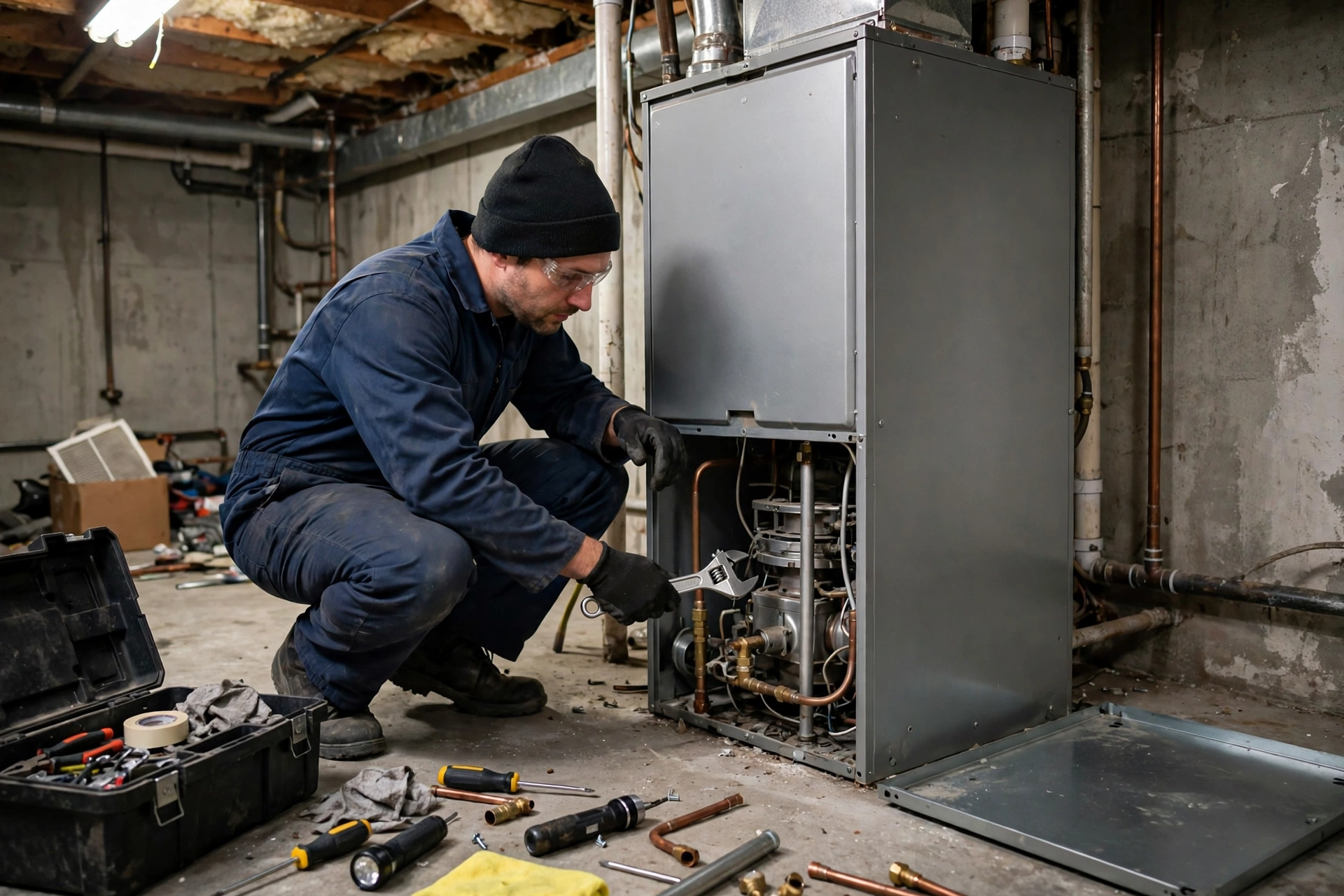
A prepared Exeter household can make a furnace visit both shorter and more accurate. Clearing a path to the furnace, moving stored items away from ductwork and the unit, and making the thermostat accessible all help a technician reach the system without delay, which matters in older downtown homes where basement access can be narrow and in subdivisions where a furnace may sit in a garage or a tight utility closet. It also helps to write down when the problem happens, which rooms are affected, and whether any recent changes, such as new windows, added insulation, or a finished room, altered how the house heats.
Simple checks before the visit can rule out common causes. Replacing a dirty filter, opening supply vents blocked by furniture or curtains, and clearing snow or ice from outdoor vents after a storm are sensible steps when they can be done safely. If the furnace has stopped entirely, or if there is a strong fuel smell, smoke, or a carbon monoxide alarm sounding, the household should leave the area and seek help promptly rather than trying repeated restarts. With clear notes and easy access, a visit in Exeter is far more likely to identify the real cause on the first trip and leave the house heating evenly again.
- Clear paths to the furnace, ductwork, and thermostat
- Notes on which rooms stay cold and when trouble appears
- Recent home changes such as windows, insulation, or finished rooms
- Filter, vent, and outdoor vent checks done safely before the visit
- Prompt help for fuel smells, smoke, or a carbon monoxide alarm
Furnace Questions in Exeter?
Tell us what your furnace is doing and where you are, and we will help arrange the next step.
Why does my historic Exeter home heat unevenly?
Historic homes often have rooms added or divided over generations, ductwork fitted around old structures, and partial insulation and window updates that change where heat escapes. Those factors can leave one floor or one end of the house colder than the rest even when the furnace runs well. A visit that reviews the layout, duct runs, and cold rooms can separate airflow and duct problems from furnace capacity problems.
What causes short cycling in an Exeter furnace?
Short cycling can come from a clogged filter, blocked vents, a thermostat issue, or a control or sensing fault. It can also follow ice or snow around an outdoor vent during freeze and thaw weather. Check the filter and vents first, then arrange a visit if the pattern continues, since repeated short cycling wears parts and leaves rooms uncomfortable.
Should I repair or replace an older furnace in Exeter?
Consider furnace age, repair history, whether past repairs solved uneven heating, and the condition of ductwork and venting. Household plans matter too, including a long term stay or a planned renovation that could change the heating layout. Reviewing those factors together during a visit gives a clearer answer than judging a single failed part alone.
What affects the scope of a furnace repair in Exeter?
Scope depends on the failed part, access to the furnace and ductwork, fuel type, and whether related parts show wear. Historic homes with narrow basement access or altered ductwork can need more time, while a single control failure in a newer system may be simpler. An inspection can explain the factors that apply to a specific home.
When should Exeter homeowners schedule furnace maintenance?
Late summer and early autumn are a good time, before long cold weather and freeze and thaw cycles begin. Maintenance then can catch ignition trouble, dirty burners and filters, and airflow problems while the house is comfortable, and it leaves time to plan a repair or replacement before winter demand rises.
What should I check before a furnace visit in Exeter?
Check the filter, open blocked supply vents, confirm the thermostat setting, and clear outdoor vents of snow and ice when safe. Note which rooms stay cold and whether trouble follows storms or thaw days. If there is a strong fuel smell, smoke, or a carbon monoxide alarm, leave the area and seek help promptly.
Furnace Questions in Exeter, Answered
Not seeing your question? Request service and tell us what your furnace is doing.
Call (855) 625-1748