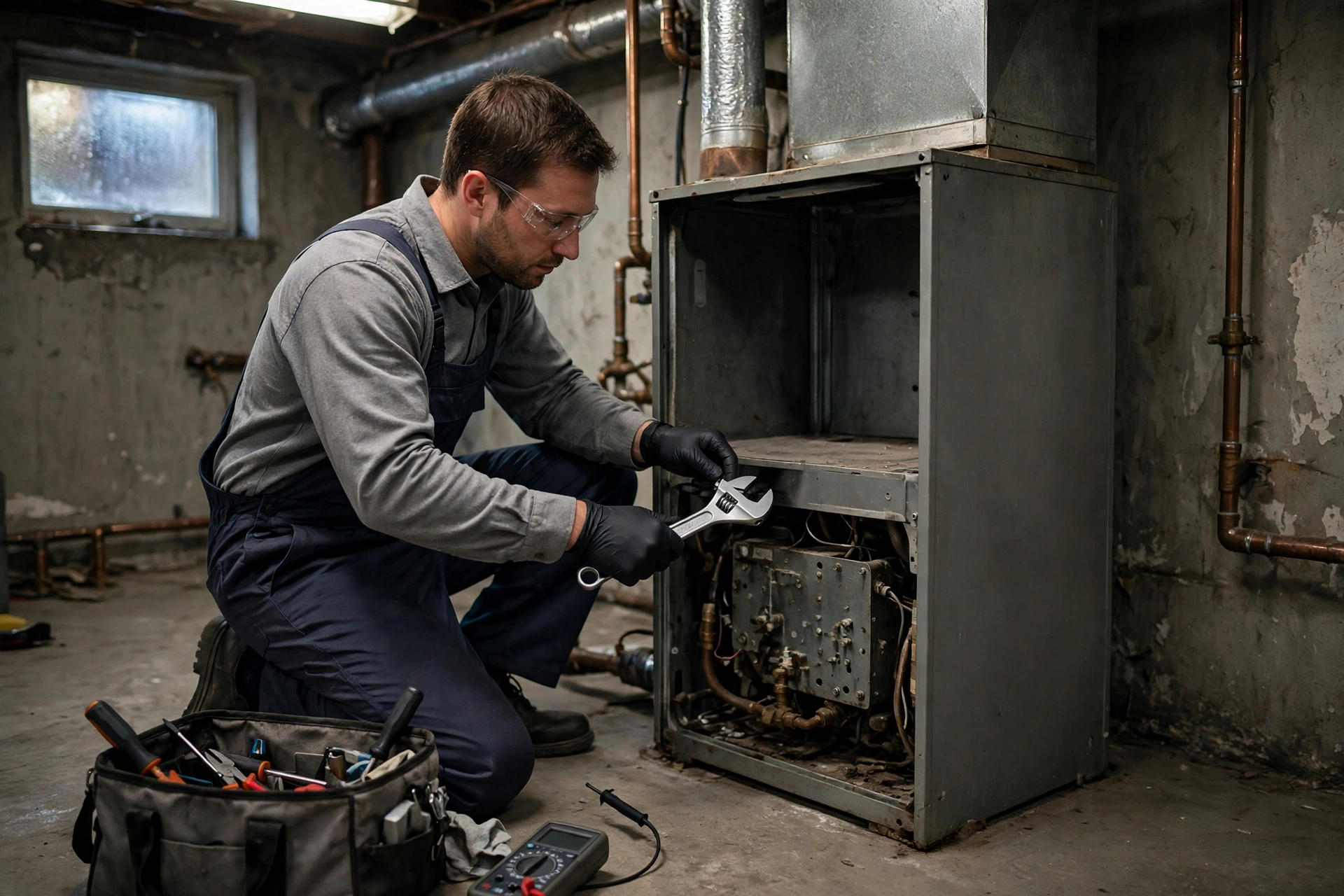
Furnace Repair
Furnace repair in New Hampshire covers diagnosis and repair of gas and oil furnaces that will not start, will …
Learn more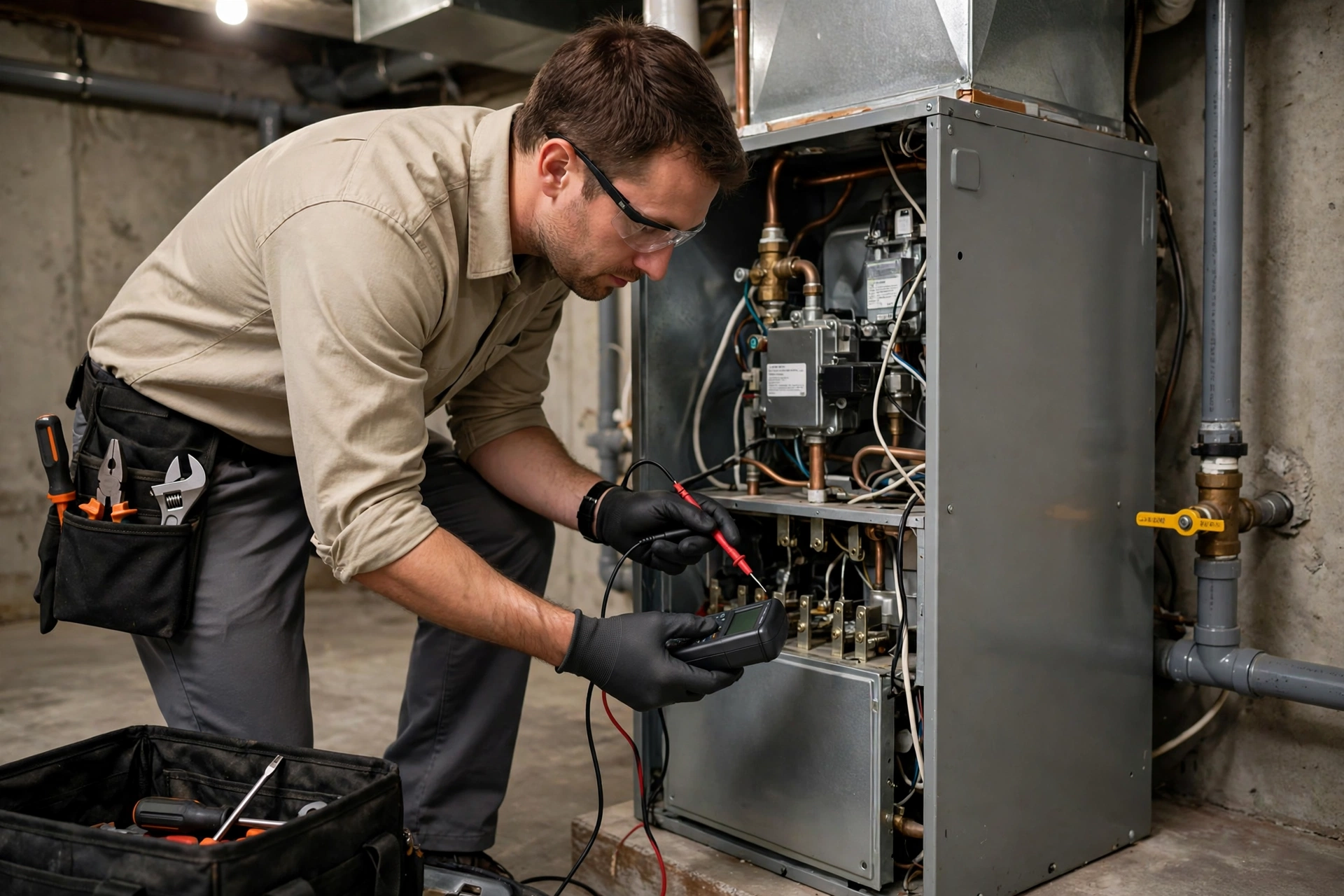
A furnace safety inspection answers a different question from a repair visit or a tune-up, even though it shares some of the same checks. Instead of asking why heat feels weak or uneven, it asks whether the furnace burns fuel cleanly, vents combustion products safely outside, and shuts down correctly when something goes wrong. That distinction matters in New Hampshire, where furnaces run for months, older venting routes pass through stone basements and tight chases, and heating oil and gas systems each carry their own combustion and fuel risks.
Safety inspections are especially valuable for households moving into an older home, returning to a house after a long vacancy, or noticing a new smell, soot mark, or alarm concern near heating equipment. They are also a sensible step before winter for systems that have not been inspected in a while, because vent blockages from snow, nests, or debris, cracked heat exchangers, and failing safety controls rarely announce themselves with a loud breakdown. A system can still produce heat while venting poorly, which is why a dedicated safety check looks beyond comfort and focuses on combustion and exhaust paths.
Granite State Furnace Pros performs safety inspections as a systematic check, from fuel supply to vent termination, with each safety device tested under real operating conditions. Findings are explained plainly, distinguishing immediate safety concerns that need correction before further use from wear items to plan for, so the household can act with clear priorities rather than worry or guesswork. The visit ends with a clear picture of whether the furnace is safe to run through winter as it stands.
Venting carries combustion products outside, and any restriction, leak, or misrouting in that path can allow those products to linger indoors. Inspection checks vent pipes for corrosion, separation, improper slope, and blockages, and follows the route to its termination outside, where snow, ice, leaves, nests, and debris can obstruct the outlet. Chimney connected systems receive attention at the connection point and along the flue path, because older masonry and metal flues can deteriorate in ways that are invisible from the living rooms above.
Combustion air is the other half of safe venting. A furnace needs a steady supply of fresh air to burn fuel cleanly, and tightly sealed utility rooms, new windows, or added insulation can change how air reaches the burner. Inspection confirms that combustion air openings remain clear, that the burner does not starve for air or pull drafts through living spaces, and that nearby exhaust fans or dryers do not compete for the same air. Those checks protect both flame quality and indoor air, especially in older basements where several appliances may share one space.
The heat exchanger separates combustion gases from indoor air, so its condition sits at the center of furnace safety. Inspection looks for cracks, corrosion, soot patterns, and signs of overheating, using visual checks and flame behavior during a full heating cycle. A flame that lifts, rolls out, burns unevenly, or changes color unexpectedly can signal a burner, airflow, or exchanger problem that needs closer attention before the system runs through another winter.
Burner condition supports that assessment, with gas burners checked for clean ports and steady ignition, and oil burners checked for nozzle condition, fuel flow, and flame shape. Soot around a burner, scorch marks near the cabinet, or a strong fuel smell all count as safety findings, not cosmetic ones, because they point to incomplete combustion or fuel delivery trouble. When inspection finds a burner or exchanger concern, the household receives a clear explanation of why the system should not simply be reset and run as before.
Fuel safety inspection follows the fuel path from its source to the burner, checking connections for leaks, damage, and proper support. Gas connections are checked for odor, loose fittings, and damaged piping, while oil lines are checked for drips, damp joints, tank condition, and routing through cold or vulnerable areas. A small fuel leak in a basement can go unnoticed for weeks, especially when storage boxes or laundry equipment hide the line, so a deliberate walk along the full fuel route matters more than a glance at the furnace cabinet alone.
Shutoff access is part of the same check. The household should know where fuel and power shutoffs sit and whether they operate freely, because quick shutoff matters if a leak or strong odor appears. Inspection confirms that shutoffs are accessible, labeled in a way the household understands, and not blocked by stored items. That simple readiness step, combined with leak free connections, greatly reduces risk if a fuel problem ever develops during winter.
Safety controls exist to stop a furnace when conditions turn unsafe, and inspection tests whether those controls actually do their job. Limit switches, flame sensors, rollout switches, pressure switches, and other protective devices are checked for correct operation, not merely for presence. A control that looks intact but fails to trip when it should offers false confidence, so testing under operating conditions, including startup, steady run, and shutdown, reveals whether the protective chain responds as designed.
Alarms in the home complete that protective chain. Carbon monoxide alarms near sleeping areas and near heating equipment should be present, powered, and within their useful life, and households should know what alarm sounds mean and what steps to take if one sounds. Inspection notes alarm placement and condition and explains the response steps plainly, including leaving the home and seeking fresh air if an alarm sounds or if occupants feel ill near heating equipment. Those steps are never a substitute for repair, but they protect the household while a safety fault is corrected.
Some inspection findings require action before the furnace runs again, including vent blockages that prevent safe exhaust, fuel leaks, cracked heat exchangers, and safety controls that fail to trip. When such a finding appears, the technician explains what was found, why it matters, and what correction comes next, and the system is left in a safe state rather than restarted for comfort. That pause can feel difficult during cold weather, but running a system with a known venting or combustion fault risks far more than a cold night, and a clear correction plan helps the household move quickly to a safe repair.
Other findings fall into a planning category, including worn controls, aging vent sections, fuel lines that need rerouting, or alarms due for replacement. Those items do not necessarily stop the system immediately, but they should be scheduled before winter demand peaks, because wear and vent deterioration tend to worsen under sustained cold. A written summary distinguishing immediate concerns from planning items helps households prioritize spending and scheduling, and it gives future technicians a baseline for the next safety inspection.
After a safety inspection, keeping a simple record of findings, corrections, and dates helps the household stay ahead of future risk. That record should note vent condition, fuel line observations, safety control test results, alarm placement, and any planning items scheduled for later, so the next inspector starts from a known baseline instead of rediscovering the same concerns. Storing that record near the furnace, along with shutoff locations and response steps for alarms or fuel odor, also helps any household member act calmly if a concern appears.
Alarm care belongs in that same routine, with batteries and power checked regularly and alarms replaced when they reach the end of their useful life. Households should also keep vent terminations clear of snow and debris through winter, keep the furnace area clear of stored items, and note any new smell, soot mark, or sound near heating equipment as soon as it appears. Those habits do not replace professional inspection, but they extend its value between visits and keep a New Hampshire home safer through every month of heating season.
Describe what your system is doing and we will help arrange the next step.
A tune-up focuses on cleaning, performance, and reliability, while a safety inspection focuses on venting, combustion, fuel connections, and shutdown controls. The two visits overlap in some checks, but a safety inspection gives priority to findings that affect safe operation.
An annual safety check before heating season suits most New Hampshire homes, with additional checks after a move, a long vacancy, a fuel change, or any new smell, soot, or alarm concern near heating equipment. Older venting and fuel systems benefit most from that regular rhythm.
Leave the home for fresh air, do not re-enter to silence the alarm or restart the furnace, and seek help from emergency services or a heating professional as local guidance directs. If anyone feels ill, seek medical attention promptly and mention possible carbon monoxide exposure.
Yes, a furnace can deliver warm air while venting poorly, burning incompletely, or operating with a failing safety control. Comfort alone does not confirm safe venting or combustion, which is why dedicated safety checks inspect those paths directly.
Safety inspection cost depends on system type, fuel type, venting complexity, and the scope of testing required for the home. Systems with chimney flues, multiple appliances sharing a vent, or hard to access runs can involve more inspection work.
A safety inspection is a sensible step when buying an older home, because venting, fuel lines, and safety controls may have aged or changed through past renovations. Findings give the buyer a clear safety baseline before the first winter in the home.
Not seeing your question? Request service and describe what your system is doing.
Call (855) 625-1748Furnace repair in New Hampshire covers diagnosis and repair of gas and oil furnaces that will not start, will …
Learn more
Furnace installation in New Hampshire means selecting a correctly sized gas or oil furnace for the home, remov…
Learn more
A furnace tune-up in New Hampshire is a seasonal inspection, cleaning, and testing visit for gas or oil furnac…
Learn more