Furnace Repair in Merrimack, NH
Merrimack is a Hillsborough County town on the Merrimack River, between Nashua and Bedford, and its identity as a commuter town shapes its heating needs in a quiet but important way. Many households here leave early for work in Nashua, Manchester, or toward the Massachusetts border, return in the evening to a house that has been holding heat all day, and expect the furnace to recover quickly, hold steady overnight, and keep every bedroom comfortable through a long New Hampshire night. That daily rhythm, repeated through months of cold weather, puts a steady load on a heating system, and a furnace that is already struggling with airflow or a worn part will show it first on the coldest mornings, when the house must warm from its overnight setting and every room is needed at once.
Serving Merrimack, NH 03054
The housing in Merrimack reflects several eras of growth, and each era heats differently. Older homes near the river and along the town's earlier roads hold the smaller rooms, plaster walls, and layered updates that come from decades of living, while wooded subdivisions built in later decades hold ranch homes, split level houses, and two story family homes set back among trees. A wooded lot can shelter a house from wind, which helps, but it can also shade a home through short winter days and leave north facing rooms colder, and a house on a wooded street may have ductwork running through a cold attic or a crawl space that was never fully insulated. The result is a town where two houses on the same road can have very different heating experiences, depending on age, layout, tree cover, and the path heat must travel from furnace to bedroom.
This page explains furnace care for Merrimack in those local terms. It covers the heating patterns of river town homes and wooded subdivisions, the warning signs that deserve attention before a cold snap, the way commuter routines affect furnace wear, and the factors that shape a repair or replacement decision for a family home here. The questions at the end answer the concerns Merrimack homeowners raise most often, from cold bedrooms and short cycling to maintenance timing and simple checks before a visit, so a household here can head into winter with a heating system it can trust through the morning rush and the coldest nights.
Merrimack River Town Homes and Wooded Subdivisions
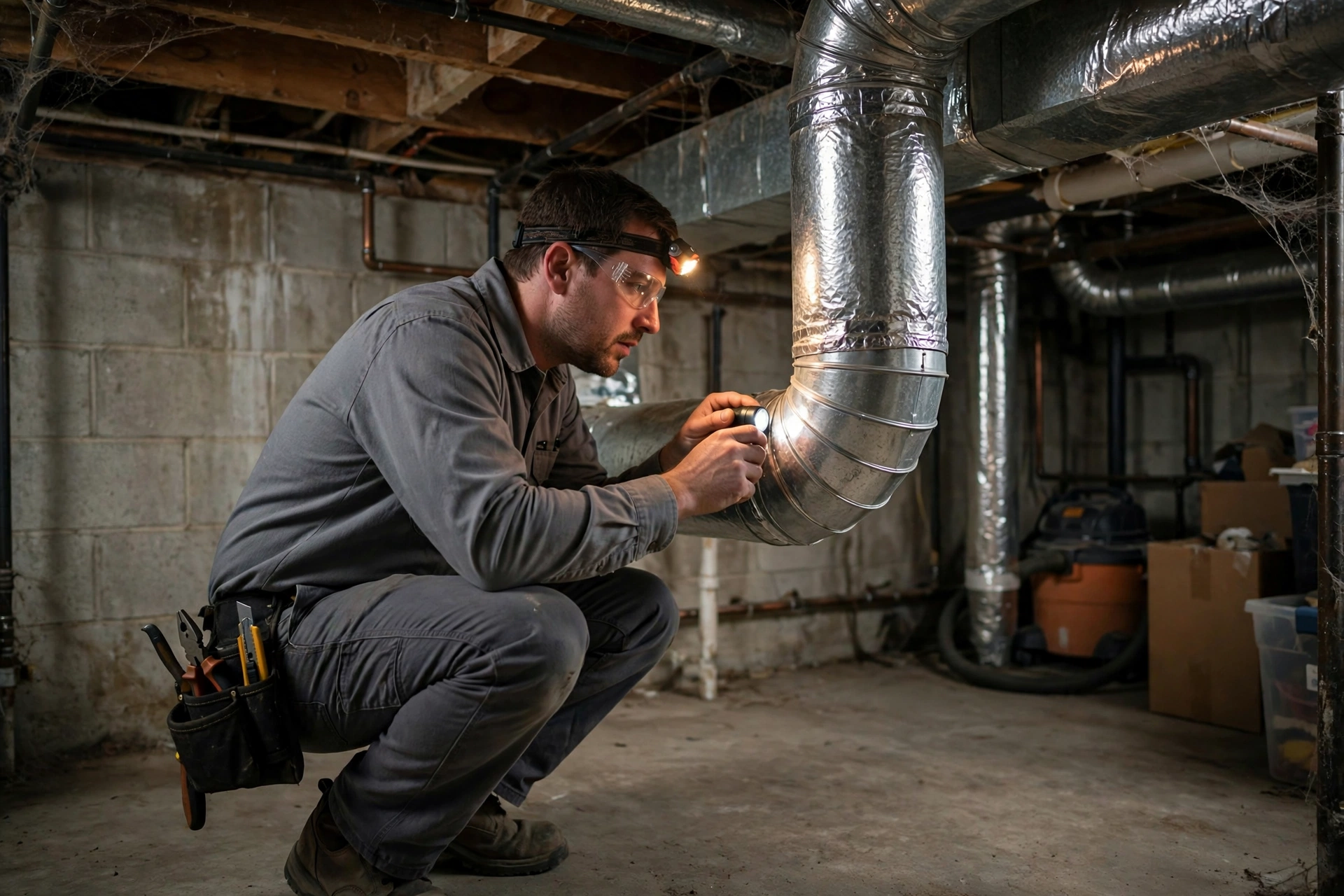
Merrimack homes near the river and along older roads tend to be smaller and older than the subdivision homes that grew up around them, and their heating systems often reflect that history. A furnace in an older river town home may serve rooms that were added or divided over time, with ductwork fitted around beams, stone foundations, and staircases that were never designed for forced air heat. Heat may arrive strongly near the furnace and weakly at the far end of the house, and a back bedroom or a kitchen over an unheated space can stay cold even when the living room feels comfortable. Partial updates, such as new windows on one side of the house or insulation added to an attic in one season but not to walls in another, can shift heat loss in ways that make one side of a home noticeably colder than the other.
Wooded subdivisions present a different set of heating patterns, and they are worth understanding separately. A house set among trees gains shelter from wind, which reduces drafts, but it also loses winter sun on shaded sides, and a north facing bedroom or a room tucked behind dense trees can stay cold through the day. Split level and two story subdivision homes often struggle with the way warm air rises, leaving lower levels cool while upper bedrooms overheat, and a single thermostat placed in one part of the house cannot easily satisfy both levels. Ductwork in these homes often runs through attics or garage ceilings, where cold air can steal heat before it reaches a distant room, and a finished lower level used as a bedroom, office, or playroom may need more heat than the original layout was designed to deliver. Describing the lot, the shaded side, and the level that stays cold helps a technician understand a Merrimack heating problem far better than a general complaint that the house feels chilly.
- Older river town homes with rooms added or divided over decades
- Ductwork fitted around beams, stone foundations, and old staircases
- Wooded lots that shelter from wind but shade north facing rooms
- Split level and two story homes where warm air rises unevenly
- Duct runs through attics and garage ceilings that lose heat
- Finished lower levels needing more heat than the original layout delivered
Merrimack Commuter Routines and Furnace Wear
Commuter life in Merrimack, with early departures toward Nashua and Manchester and evening returns to a cold house, places a particular pattern of wear on a furnace. A system that must recover a house from a daytime setback each evening, then hold steady through the night, then recover again for the morning rush, cycles more often than a system in a house occupied all day at a steady temperature. That repeated cycling is normal, but it exposes worn parts sooner: a blower motor that is already tired, an ignition control that hesitates, or a flame sensor that needs cleaning will show trouble first during those recovery periods, when demand is highest and patience is lowest.
Thermostat habits add to the picture, and they are worth discussing honestly during a furnace visit. Turning heat down sharply while away can save fuel, but a house that cools deeply on a cold day takes longer to recover, and rooms over garages or on shaded sides may lag behind the rest of the house for hours after the thermostat calls for heat. A household that keeps a steadier temperature through the coldest weeks often finds rooms more even, even if the furnace runs more often, because the house itself stays warmer and ductwork does not have to overcome a deep chill each evening. Neither habit is wrong on its own, but the pattern matters, and telling a technician how the house is heated through a typical weekday helps explain why trouble appears at certain times rather than all day long.
- Evening recovery heating after a day away from home
- Morning demand when every bedroom is needed at once
- Repeated cycling that exposes tired motors and ignition parts sooner
- Deep daytime setbacks that leave shaded rooms lagging for hours
- Steadier winter temperatures that can improve room to room evenness
- Weekday heating patterns worth describing during a furnace visit
Long Cold Winters and Freeze and Thaw in Merrimack
Merrimack winters are long, and the heating season stretches from the first cold nights of autumn through the changeable weather of early spring, which means a furnace here rarely gets a real rest for months at a time. Sustained cold exposes weaknesses that mild weather hides, because a furnace that cycles gently in autumn may run almost continuously during a deep cold spell, and parts that were already worn are more likely to fail under that sustained load. Households on exposed rises or near open ground along the river valley can feel wind driven cold more keenly, while sheltered wooded homes may still lose heat through older windows, basement sills, and attic bypasses that let warm air escape upward and draw cold air in at ground level.
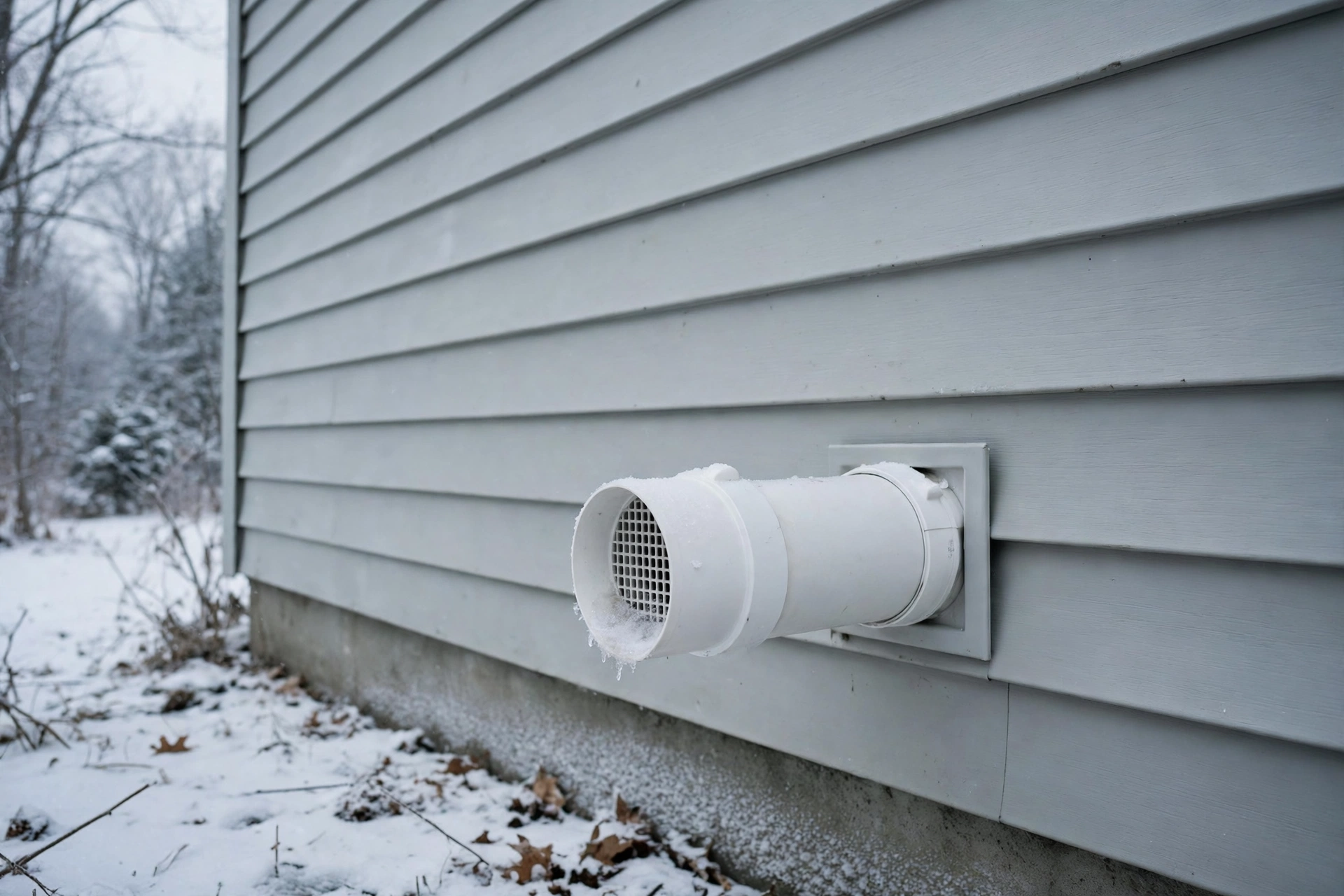
Freeze and thaw cycles at the edges of the season add a second kind of strain, as days that warm enough to melt snow are followed by nights that refreeze it, leaving ice around outdoor vents and moisture around flue terminations. A furnace that starts and stops repeatedly after a thaw, or that struggles to light on a damp morning, may be signaling a venting or sensing problem rather than a thermostat fault, and that timing is worth reporting. Keeping outdoor vents clear of snow and ice after storms, keeping the furnace area dry, and replacing a dirty filter before the coldest weather arrives are simple steps that help a Merrimack system cope with both sustained cold and changeable shoulder season weather.
- Sustained cold that keeps a furnace running for weeks without rest
- Wind exposure on open rises and near the river valley
- Warm air escaping through attic bypasses and basement sills
- Ice around outdoor vents during freeze and thaw days
- Repeated starting and stopping after thaw or storm weather
- Filter and vent care before the coldest stretches arrive
Warning Signs for Merrimack Furnaces
Most furnace problems in Merrimack announce themselves gradually, and the households that act early are usually those that notice a change in a familiar pattern rather than waiting for a complete breakdown. Uneven heating is the most common early sign, especially when a bedroom that heated well last winter now stays cold, or when a lower level that was comfortable in autumn grows chilly as winter deepens. Short cycling is another clear signal, where the furnace fires for a short burst, stops, and fires again without warming the house, wasting fuel and wearing parts while leaving rooms clammy rather than warm. New sounds also matter, including banging at startup, squealing from a blower, rattling ductwork, or a humming noise that was not present last season, because each sound can point to a different part of the system.
Some warning signs are quieter but no less important, and they deserve attention too. A Merrimack furnace that needs the thermostat adjusted again and again to hold comfort, a burner that is slow to light, a flame that looks faint or unsteady, or a dusty or musty smell whenever the heat starts can each point to a part of the system that needs care. Fuel use that rises with no change in weather or household routine is another hint, since a furnace that runs longer to keep the same indoor temperature is often losing ground through a dirty filter, a tired blower, or ductwork that leaks. One sign on its own may have a simple explanation, but several together, above all during morning warm-up or on the coldest nights, usually mean a visit is wise before the next cold snap.
- A bedroom that heated well last winter but now stays cold
- Lower levels growing chilly as winter deepens
- Short cycling that fires briefly without warming the house
- Banging, squealing, rattling, or new humming during heating
- Burner trouble, unsteady flames, and rising fuel use
- Thermostat settings that no longer hold steady comfort
Repair or Replacement Decisions in Merrimack Family Homes
Deciding between repair and replacement in Merrimack usually turns on three things together: the furnace, the house, and the household plan. A relatively newer furnace with a single failed motor, control, or sensor is often a strong repair candidate, especially when ductwork delivers air evenly and the house heats comfortably once that part is fixed. An older furnace that has needed repeated visits, that still heats unevenly after repairs, or that relies on parts that are becoming hard to find may point toward replacement planning, even if a repair could carry it through one more season, because repeated midwinter failures are disruptive for a commuter household that depends on reliable morning heat.
Household plans matter just as much, and they should be part of the conversation. A family settling into a Merrimack home for many years may value a replacement that improves comfort in cold bedrooms and lower levels and reduces the risk of a breakdown on a cold morning, while a household planning a larger renovation or a move may prefer a repair that keeps heat reliable until that larger project takes shape. Fuel type, venting, duct condition, home size, and the shaded or wind exposed character of the lot all shape the options, and an open discussion of those factors helps a household weigh comfort and reliability against the disruption of installation work, without pressure to choose one path over the other.
- Furnace age and how often repairs have been needed recently
- Whether past repairs solved uneven heating or only eased it briefly
- Ductwork, venting, and the layout and lot character of the house
- Fuel type and how the existing system fits the home as it stands
- Plans for a long stay, a renovation, or a move in coming years
- Reliability needs for morning recovery heating on cold weekdays
Getting Ready for a Furnace Visit in Merrimack
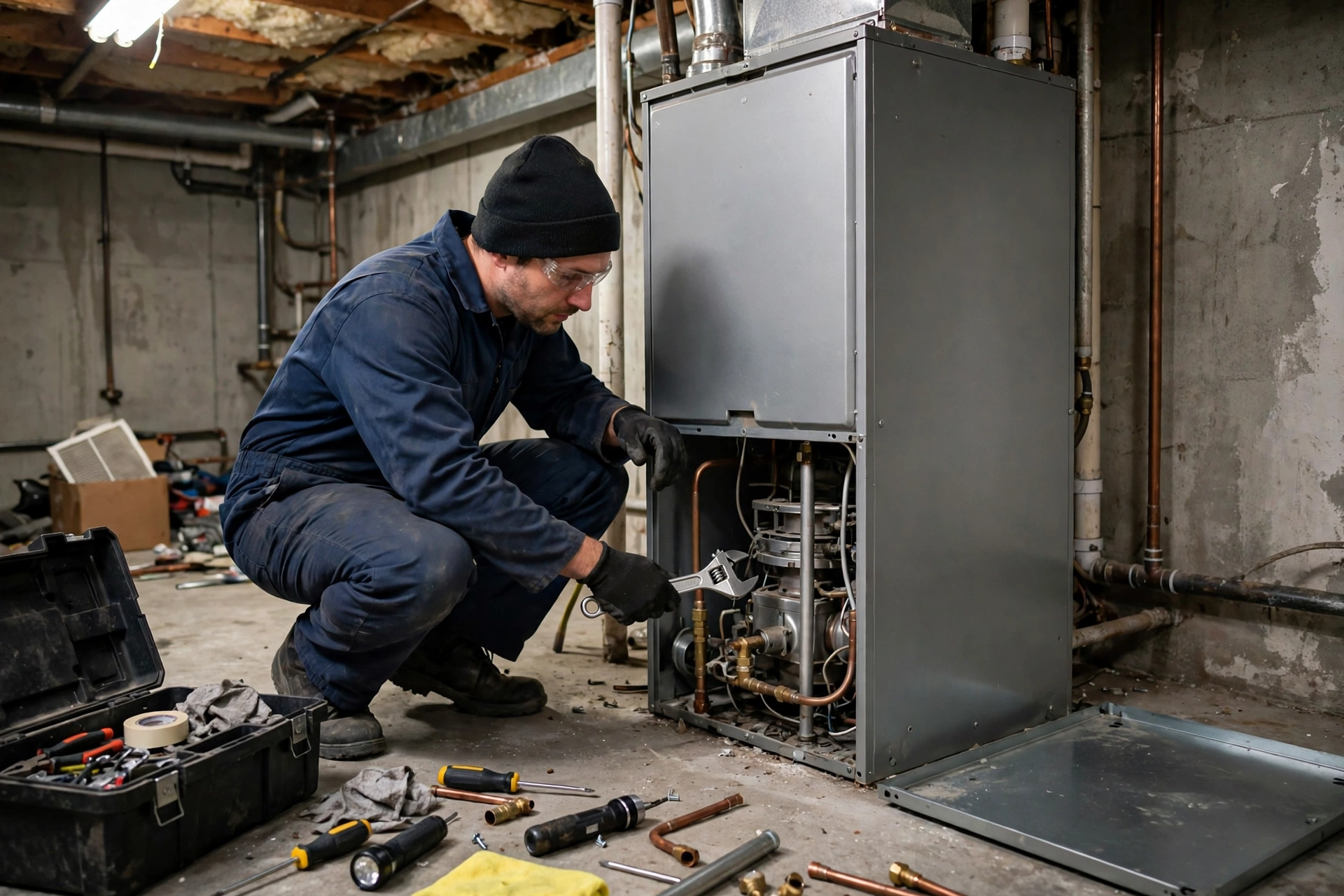
A little preparation before a furnace visit can make the visit shorter and more useful, especially in a Merrimack home where the furnace may sit in a basement, a garage utility area, or a tight closet, and where ductwork may run through an attic or a crawl space. Clearing a path to the furnace, moving stored items away from the unit and from ductwork, and making the thermostat accessible all help a technician reach the parts that matter without delay. It also helps to note when the problem happens, whether it is worst during morning recovery, on cold nights, or only in certain rooms, and whether any recent work, such as new windows, added insulation, a finished lower level, or a room over a garage, changed how the house heats.
Homeowners can also take a few simple checks before help arrives, provided they feel comfortable doing so. Replacing a dirty filter is one of the most useful steps, since a clogged filter is a common cause of weak airflow and short cycling, and opening supply vents blocked by furniture, rugs, or curtains can restore heat to a room that seemed to have a furnace problem. Clearing snow or ice from outdoor vents after a storm is another sensible step when it can be done safely. If the furnace has stopped entirely, or if there is a strong fuel smell, smoke, or a carbon monoxide alarm sounding, the household should leave the area and seek help promptly rather than trying repeated restarts, and a clear description of the problem will help the visit solve the trouble on the first trip.
- Clear access to the furnace, ductwork, and thermostat
- Notes on morning recovery trouble, cold nights, and cold rooms
- Recent changes such as windows, insulation, or finished rooms
- Filter replacement and vents opened and unblocked
- Outdoor vents cleared of snow and ice when safe to do so
- Prompt help for fuel smells, smoke, or a carbon monoxide alarm
Furnace Questions in Merrimack?
Tell us what your furnace is doing and where you are, and we will help arrange the next step.
Why do some Merrimack bedrooms stay cold while the living room feels warm?
Cold bedrooms in Merrimack often follow duct layout, room position, and lot character rather than the furnace alone. A bedroom over a garage, on a shaded side, or at the far end of a duct run can receive less warm air, and a lower level room can stay cool while warm air rises upstairs. Noting which rooms stay cold and whether trouble is worse during morning recovery heating helps narrow the cause.
Can commuter heating habits affect my Merrimack furnace?
Yes, a house that cools during the day and must recover each evening cycles more often, which can expose worn motors, ignition parts, and sensors sooner. Deep daytime setbacks can also leave shaded rooms lagging for hours after the thermostat calls for heat. Describing a typical weekday heating pattern helps a technician understand why trouble appears at certain times.
What causes short cycling in a Merrimack furnace?
Merrimack furnaces that cycle on and off too often are often reacting to a dirty filter, blocked supply or return vents, a thermostat that is not sensing the house well, or a control fault. Ice at an outdoor vent during freeze and thaw conditions can trigger it too. Check the filter and every vent first, and if the behavior continues, schedule a visit, because short cycling wears parts and leaves the house uncomfortable.
Should I repair or replace an older furnace in Merrimack?
A Merrimack repair or replace decision should weigh furnace age, how often it has needed repair, whether earlier repairs fixed uneven rooms, and the state of ducts and venting. Plans for the house matter as well, such as staying long term, renovating, or moving. Weighing those points together on a visit gives a better answer than focusing on one failed part.
What affects the scope of a furnace repair in Merrimack?
Scope depends on the failed part, access to the furnace and ductwork, fuel type, and whether related parts show wear. Homes with attic or crawl space ductwork, tight utility spaces, or altered layouts can need more inspection and fitting time, while a single control failure in a newer system may be simpler. An inspection can explain the factors for a specific home.
When should Merrimack homeowners schedule furnace maintenance?
In Merrimack, late summer into early autumn is a good window for maintenance, before the heating season stretches out and cold weather finds weak parts. Servicing then can catch ignition faults, dirty filters and burners, and airflow trouble while comfort is easy to keep, and it leaves room to plan a repair or replacement before winter demand.
Furnace Questions in Merrimack, Answered
Not seeing your question? Request service and tell us what your furnace is doing.
Call (855) 625-1748