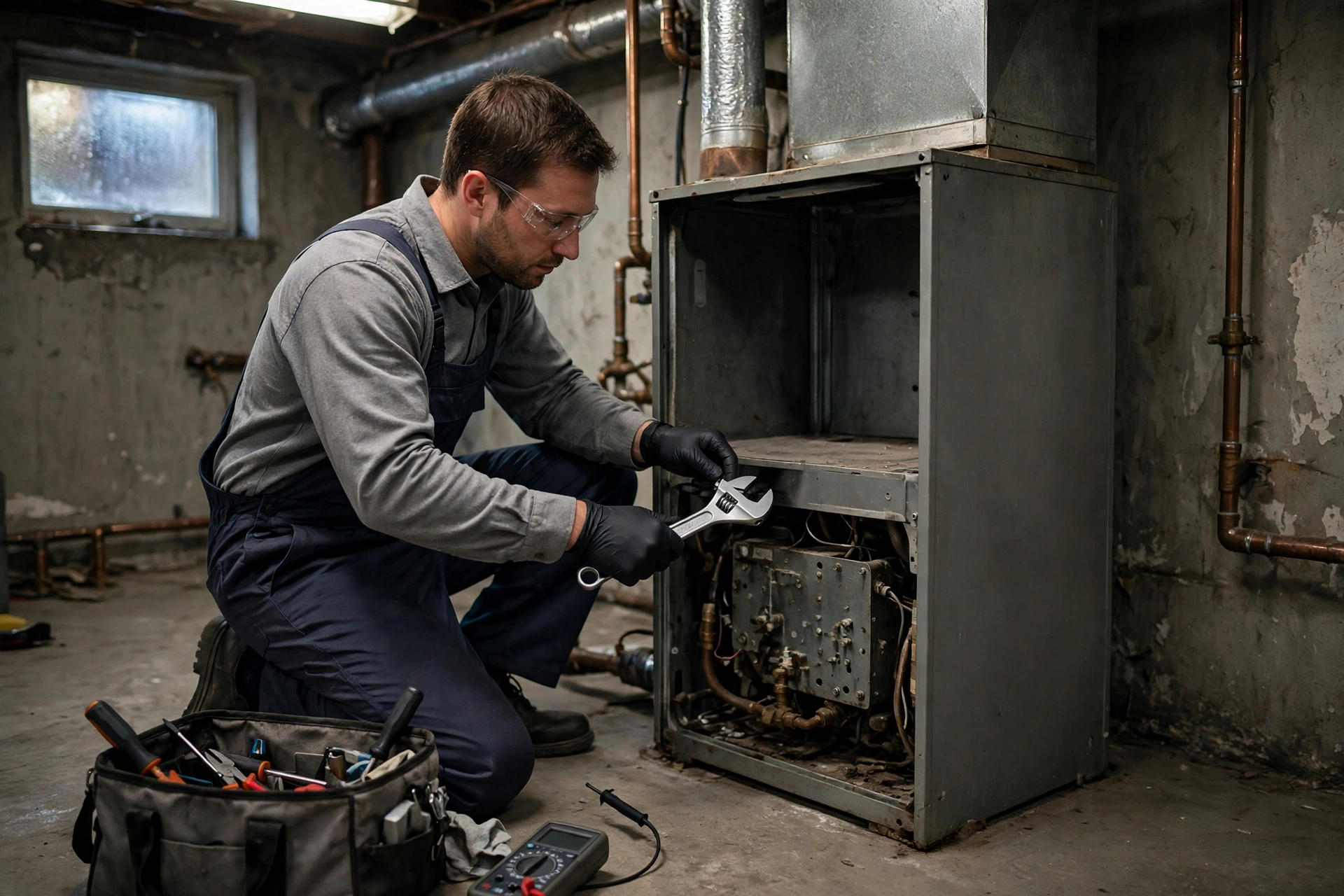
Furnace Repair
Furnace repair in New Hampshire covers diagnosis and repair of gas and oil furnaces that will not start, will …
Learn more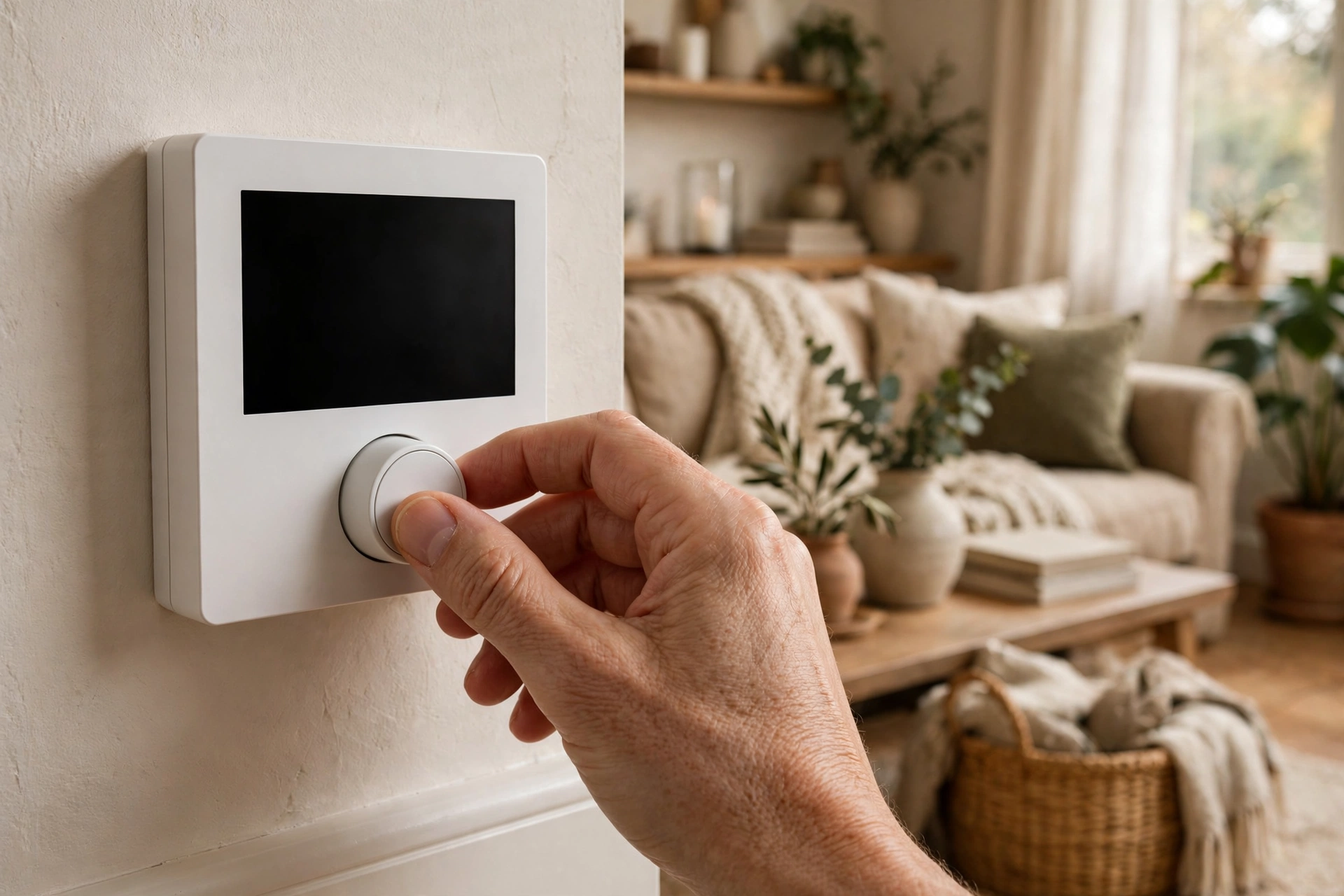
A thermostat looks simple, yet it governs every heating decision in the home, telling a furnace, boiler, or heat pump when to start, how long to run, and when to rest. When that control misreads temperature, loses power, or sends a confused signal, the whole heating system can behave strangely, short cycling, running without rest, or ignoring a setting the household clearly chose. Many heating complaints that feel like furnace faults actually begin at the wall control, in its wiring, its location, or its compatibility with the system it serves.
New Hampshire homes add specific thermostat challenges. Older houses often carry thermostats placed decades ago near drafty entries, sunny windows, or heat sources that distort readings. Renovations move walls and change room use without moving the control, and upgrades from a simple dial to a programmable or connected control can introduce wiring mismatches if the new unit expects a power wire the old system never provided. A thermostat that worked adequately in a small original footprint may struggle once additions, finished basements, or ductless heads change how heat moves through the house.
Granite State Furnace Pros treats thermostat work as system work, not as swapping a small device in isolation. Wiring, power supply, control compatibility, sensor placement, and heating equipment settings are checked together, so a new thermostat actually improves comfort instead of introducing new cycling or communication faults. The household leaves with a control it understands, set for its schedule and its home, rather than a device left at defaults that fights the heating system all winter.
A blank screen, a temperature reading that never changes, or a system that ignores heat calls often traces to thermostat power or wiring rather than to the furnace or boiler itself. Loose wires, corroded connections, a tripped breaker, a drained battery in a battery powered unit, or a missing power wire for a newer control can all interrupt the signal between wall and equipment. Those faults can appear suddenly after painting, renovation, or a power outage, and they can also develop slowly as connections loosen under years of temperature change.
More subtle thermostat faults involve placement and sensing. A control mounted above a radiator, beside a sunny window, near a kitchen range, or in a drafty hallway reads a local temperature that does not represent the home, so the heating system starts too late, runs too long, or shuts down while other rooms still feel cold. Moving the control, shielding it from drafts, or adding a remote sensor can correct that distortion, and the improvement often feels larger than any equipment change because the system finally responds to the rooms people actually occupy.
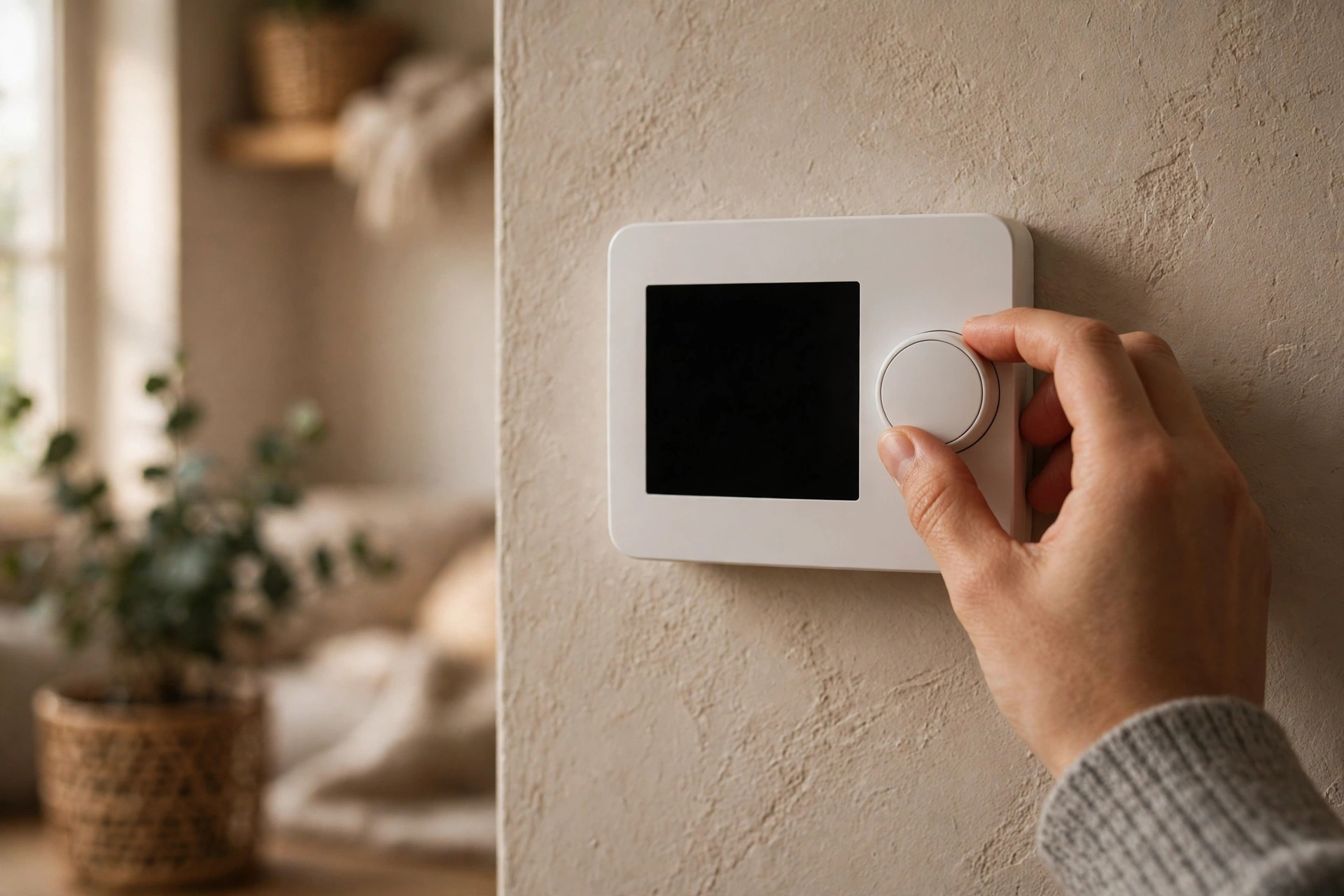
Replacement choice depends first on compatibility, because furnaces, boilers, and heat pumps use different control signals and staging. A control designed for forced air heat may not suit a boiler with zone valves, and a heat pump control must handle mode switching and auxiliary heat correctly. Wiring at the wall reveals much of that story, including how many wires reach the control, whether a common power wire exists, and whether zone controls or ductless heads share the same system. Matching the control to those realities prevents the frustrating outcome of a new device that looks modern but cannot operate the equipment correctly.
Features come second, after compatibility is confirmed. Programmable schedules suit households with regular routines, while simpler controls suit households that prefer a steady setting all winter. Connected controls add remote adjustment and usage insight, but they also need reliable wireless coverage at the wall location and a power supply that supports their display and communication. A good installation conversation weighs those features against daily habits, so the household gains convenience without adding complexity it will never use.
Before a new thermostat goes on the wall, wiring and power need a careful check. Each wire is identified by its function, not merely by its color, because older New Hampshire homes sometimes carry nonstandard wiring from past upgrades. Voltage and continuity tests confirm that power reaches the control and that signals travel cleanly to the furnace, boiler, or heat pump. Where a newer control needs a power wire that the old cable lacks, options include running new wiring, using an adapter designed for the equipment, or choosing a control that suits the existing cable, and each option carries different tradeoffs for reliability and future service.
Compatibility testing continues after installation, through several complete heating cycles. The new control should call for heat promptly, hold the set temperature without wide swings, allow the system to shut down cleanly, and handle setbacks without confusing the equipment. For heat pumps, mode switching and auxiliary heat behavior need explicit testing, and for zoned boiler systems, each zone should respond independently. Those tests catch wiring or setting faults while the installer is still present, rather than leaving the household to discover them on a cold night.
Placement shapes thermostat performance more than most households realize. A control in a hallway that stays cool while living rooms warm up will keep calling for heat long after occupied rooms feel comfortable, while a control in a sunny spot will shut heat down early and leave north facing rooms cold. Drafts from an entry door, heat from a nearby lamp or television, and air leaking through the wall opening behind the control can all distort readings by enough to change comfort noticeably across the whole house.
Solutions depend on the cause. Sealing the wall opening behind the control, moving the unit to an interior wall in a frequently used room, or adding a remote sensor in the room that matters most can each restore accurate sensing. In larger or renovated homes, multiple sensors or zone controls may suit the layout better than a single wall unit trying to represent rooms with very different heating needs. The right placement conversation starts with which rooms feel wrong, not with the thermostat model alone.
Once a new thermostat is installed and tested, setup turns it from a device into a comfort tool. Heating schedules should reflect real routines, including wake times, work routines, and sleep preferences, without deep setbacks that force a heat pump or boiler to recover slowly in cold weather. Households with older homes often benefit from steadier settings, because thick walls and long pipe or duct runs recover slowly and unevenly after a large temperature drop. Small, consistent setbacks usually feel more comfortable than dramatic swings that leave some rooms lagging for hours.
Households should also learn the basic functions that matter in winter, including how to switch modes, how to override a schedule temporarily, how to change a filter reminder, and what display symbols mean when auxiliary heat or a system delay appears. Knowing those functions prevents panic when a heat pump pauses for defrost or a boiler zone takes time to warm radiators. A short walkthrough at installation, plus a note of the settings chosen, helps every household member use the new control confidently through the heating season.
After thermostat repair or installation, comfort should be checked room by room over several heating cycles, not judged from the wall display alone. The room holding the control should reach its setting without wide swings, and other rooms should follow within a reasonable range for the home's layout. If the control room overheats while far rooms stay cold, or if the system short cycles despite a correct setting, placement, wiring, or equipment settings may still need adjustment, and those symptoms are easier to correct while the installation work remains fresh.
Households should also test the everyday functions they will actually use through winter, including schedule changes, temporary overrides, and mode switches for heat pumps or zoned boilers. A control that works in a single test cycle but confuses auxiliary heat or zone calls during a real routine has not yet proven itself. A short period of normal use, with notes about any room that feels wrong or any cycle that seems too short or too long, gives the installer clear evidence for a final adjustment that makes the new control feel natural rather than intrusive.
Describe what your system is doing and we will help arrange the next step.
Wrong readings often come from placement near heat sources, sunny windows, or drafts, or from air leaking through the wall opening behind the control. Relocating the control, sealing the opening, or adding a remote sensor usually restores accurate sensing.
A blank screen can come from drained batteries, a tripped breaker, a blown equipment fuse, or a wiring fault. Checking power sources first, then wiring and equipment fuses, narrows whether the fault sits at the wall control or at the heating equipment.
Many older furnaces and boilers accept programmable controls, but compatibility depends on wiring, staging, and whether the new control needs a power wire. A wiring check before purchase prevents buying a control the existing cable cannot support.
Short cycling after a change often points to a wiring mismatch, an incorrect equipment setting, or a control placed where it senses rapid temperature swings. Testing through full heating cycles after installation reveals which of those causes applies.
Thermostat installation cost depends on the control type, wiring work needed, whether relocation is involved, and the scope of testing for the heating system it serves. A straightforward swap differs from a relocation or a new power wire run.
An interior wall in a frequently used room, away from sunny windows, radiators, kitchens, and drafty entries, usually gives the most representative reading. Remote sensors can help when the ideal wall location and the most important room differ.
Not seeing your question? Request service and describe what your system is doing.
Call (855) 625-1748Furnace repair in New Hampshire covers diagnosis and repair of gas and oil furnaces that will not start, will …
Learn more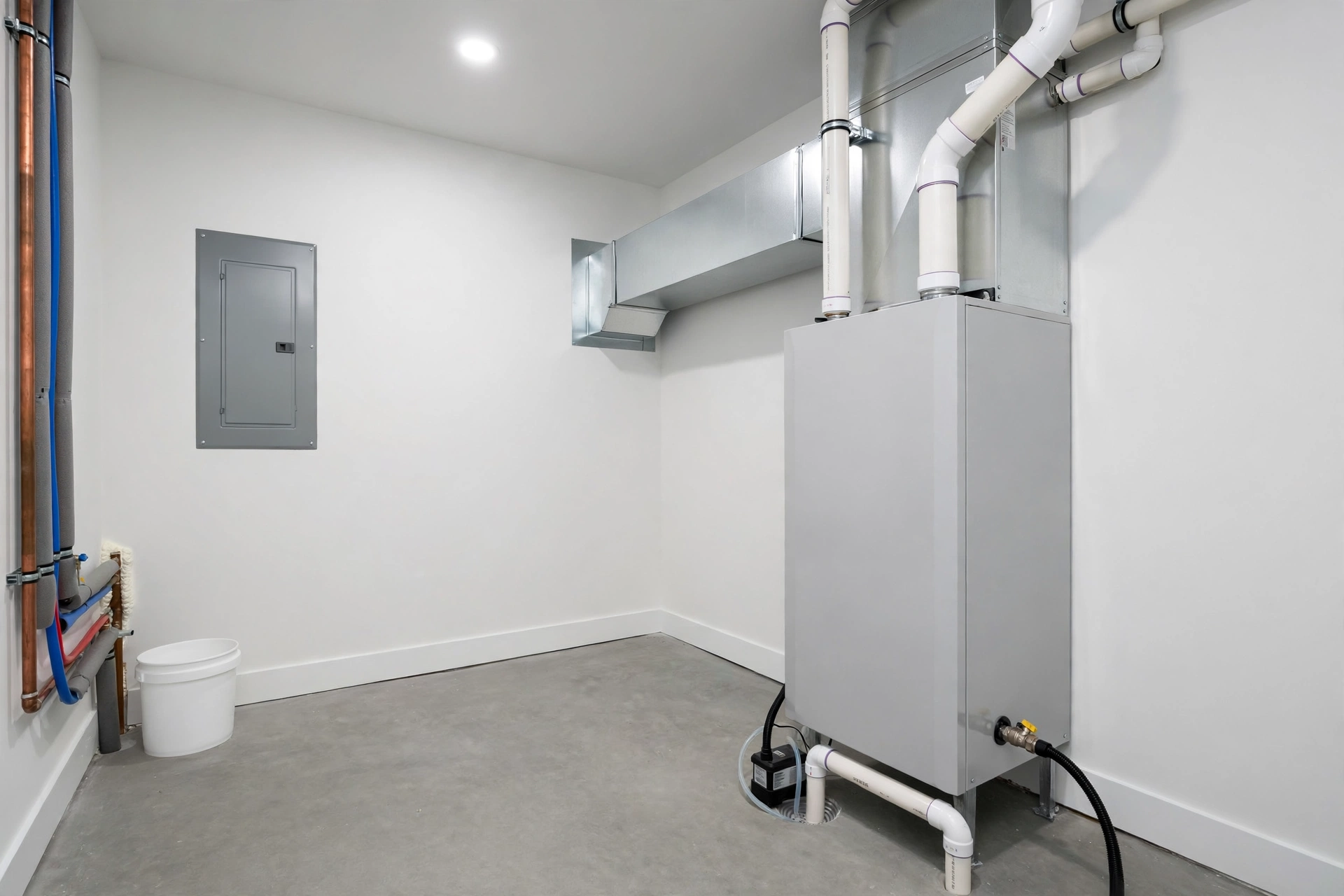
Furnace installation in New Hampshire means selecting a correctly sized gas or oil furnace for the home, remov…
Learn more
A furnace tune-up in New Hampshire is a seasonal inspection, cleaning, and testing visit for gas or oil furnac…
Learn more